

In English, we describe visible irritation as:
- Pouting
- Fuming
- Sulking
- Giving the silent treatment
It’s not explosive rage.
It’s the kind of anger you can see on someone’s face.
Arms crossed.
Cheeks puffed.
Steam almost rising from their head.
But how does Japanese capture that visibly upset, slightly adorable frustration with a repeating rhythm?
Let’s step into the world of Japanese onomatopoeia and discover the sound of fuming.
What Is a “Pouting Anger” Moment?
It’s when:
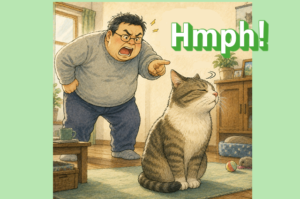
- Someone crosses their arms dramatically
- A character turns away and refuses to talk
- Cheeks puff out in protest
- Someone is clearly upset — but not terrifyingly angry
In English, we might say:
- Pouting – Showing displeasure with a sulky face
- Fuming – Visibly angry
- Sulking – Quietly showing annoyance
- Upset – Mildly angry or hurt
But Japanese gives this expressive irritation its own sound.

How Is This Feeling Expressed in Japanese?
Japanese often uses rhythmic repetition to show emotional states that are outwardly visible.
The standout word for cute, visible irritation is:
“Puun Puun” (ぷんぷん)
It represents someone who is clearly upset — and making sure you know it.
Let’s feel how it sounds.
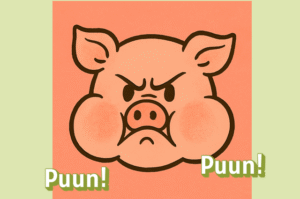
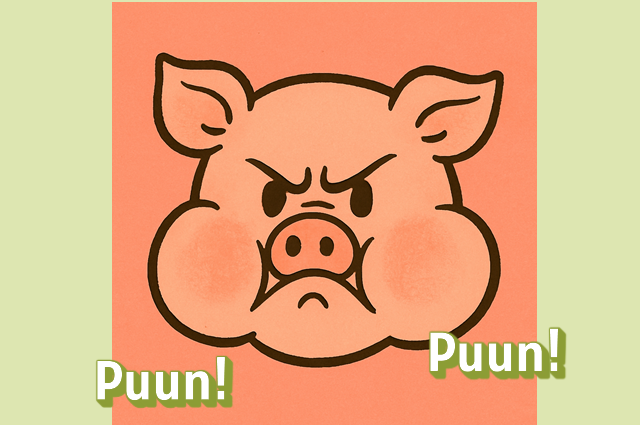
What Is Japanese Onomatopoeia “Puun Puun (ぷんぷん)” ?
“Puun Puun” describes:
Visible Irritation
- Arms crossed
- Cheeks puffed
- Turning away dramatically
Adorably Angry
- Upset but not dangerous
- Silent treatment
- Dramatic sulking
In anime and manga, you’ll often see:
- Puffed cheeks
- Little steam clouds
- Exaggerated expressions
That’s “Puun Puun” in action.
Unlike “ira ira,” which simmers internally,
“Puun Puun” is visible.
It shows.
It pouts.
Pronunciation
poon poon
(Say it with your lips puffed slightly — like steam’s about to rise!)
Categories
Emotion
Examples in Daily Life
To learn about how it appears in manga or daily conversation, dive into the following page:
Examples





Comments