
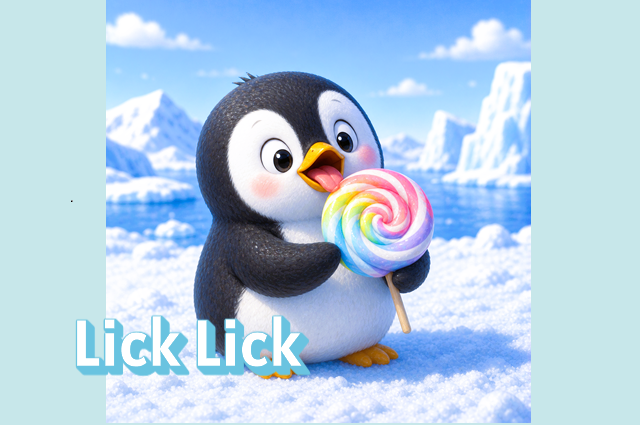
In English, we describe licking actions as:
- Lick lick
- Licking gently
- Tasting lightly
- Lapping up
It’s the soft, repeated movement of the tongue —
often gentle, careful, and sometimes playful.
But how does Japanese capture that light, delicate licking with a repeating rhythm?
Let’s step into the world of Japanese onomatopoeia and discover the sound of licking.
What Is a “Licking” Moment?
It’s when:
- An animal licks its fur
- Someone tastes food lightly
- A child licks ice cream
- Something is licked gently and repeatedly

In English, we might say:
- Lick – Passing the tongue over something
- Taste – Trying a small amount
- Lap up – Licking repeatedly (often animals)
- Nibble-taste – Light, careful tasting
But Japanese expresses that motion with softness and rhythm.
How Is This Feeling Expressed in Japanese?
Japanese often uses repeating sounds to describe small, repeated actions.
The standout word for gentle, repeated licking is:
“Pero Pero” (ぺろぺろ)
It captures a light, clean, and playful licking motion.
Let’s feel how it sounds.
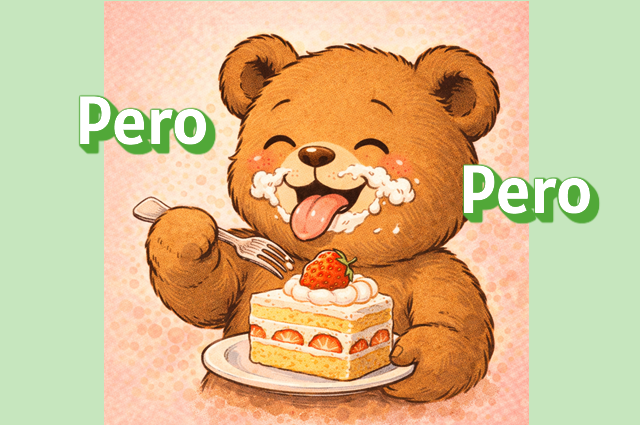
What Is Japanese Onomatopoeia “Pero Pero (ぺろぺろ)” ?
“Pero Pero” describes:
Gentle Licking
- Animals grooming themselves
- Lightly tasting food
- Repeated tongue movement
Light, Playful Motion
- Not aggressive
- Not messy
- Soft and controlled
Compared to “べろべろ (bero bero),” which feels messy or exaggerated,
“pero pero” is:
- Cleaner
- Lighter
- More delicate
It often carries a cute or gentle nuance.
Pronunciation
peh-ro peh-ro
(Say it lightly, like a quick flick of the tongue.)
Category
Motion
Examples in Daily Life
To learn about how it appears in manga or daily conversation, dive into the following page:
Examples







Comments