

Train Travel in Japan
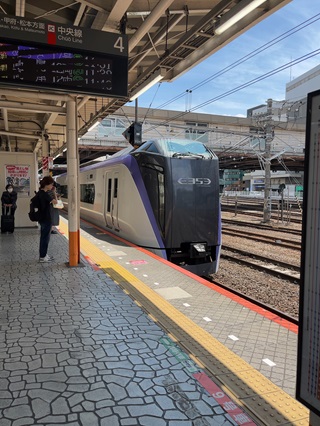
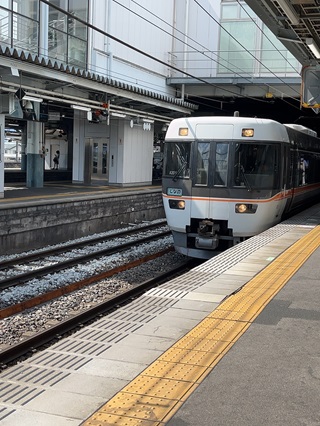
This summer, I enjoyed traveling around Japan by train. Japan has an extensive railway network, and taking a train is a wonderful way to explore the country. You can simply sit back, watch the scenery change outside the window, and enjoy the journey itself.
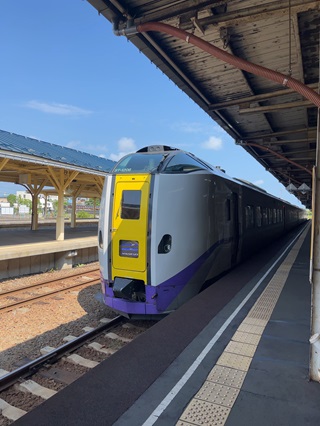
Japanese trains are also known for being punctual and reliable, so traveling by rail is usually quite easy and comfortable. Personally, I think a train journey is one of the nicest ways to discover different parts of Japan.
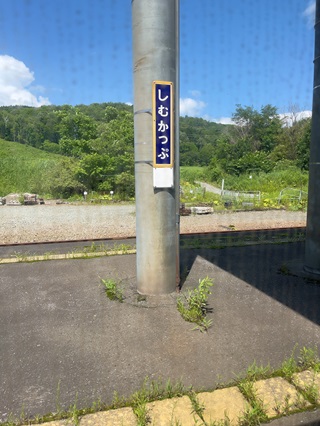
There can be surprises, though. On two of my recent train trips, the train was delayed after hitting wild deer along the way! So even in a country famous for punctual trains, nature sometimes has other plans.

Archives
Tanabata
On July 7th, Japan celebrates Tanabata, the Star Festival. According to an old legend, two lovers, Orihime and Hikoboshi, are separated by the Milky Way and can meet only once a year. People write their wishes on colorful strips of paper and hang them on bamboo branches, hoping their dreams will come true.
One of Japan’s best-known children’s songs celebrates this festival with images of bamboo leaves gently rustling in the wind and stars sparkling brightly in the summer sky. The song beautifully captures two Japanese onomatopoeias: sara sara, the soft sound of bamboo leaves swaying, and kira kira, the twinkling light of the stars.
Even today, many schools, shopping streets, and homes decorate bamboo with colorful wishes, making Tanabata one of Japan’s most charming summer traditions.
What wishes would you write on a Tanabata wish strip?
Rainy Season and Hydrangeas
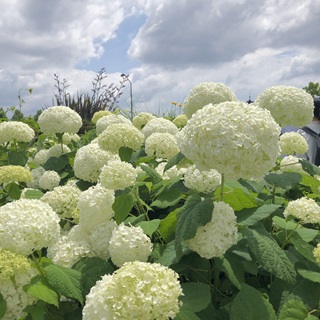
June is the season of tsuyu, Japan’s rainy season. Around this time of year, something magical happens — before you even realize it, hydrangeas begin blooming everywhere. They appear along streets, in parks, and beside quiet paths, adding touches of blue, purple, pink, and white to the rainy landscape.
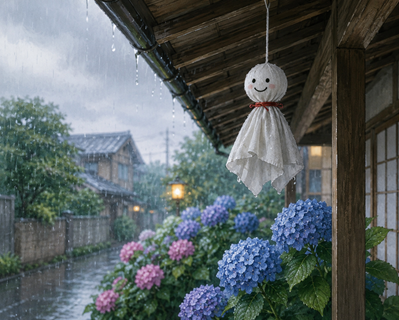
While many people look forward to the hydrangeas, they also keep an eye on the weather. In Japan, there is a traditional charm called a teru teru bōzu — a small doll usually made from white cloth or tissue paper. Children often hang one near a window and wish for sunny weather, especially before a picnic, sports day, or other special event.
The rainy season can be gray and wet, but the colorful hydrangeas and the simple hope carried by a teru teru bōzu make this time of year feel uniquely Japanese.
Do you have any traditions for wishing for good weather in your culture?
Sakura
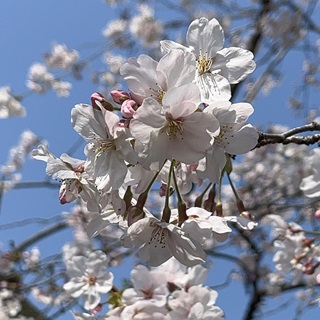
In Japan, spring can be described in one word: sakura. It is the season when people look forward to cherry blossoms and take time to enjoy their beauty.
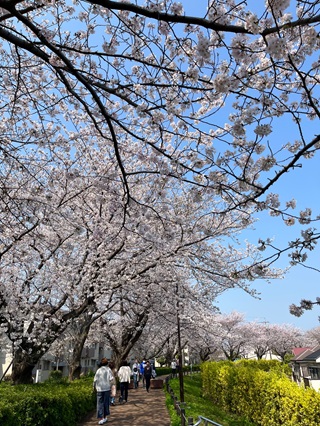
Because the blossoms are so eye-catching, you begin to notice just how many cherry trees there are throughout the city once they start to bloom. Streets, parks, and riversides suddenly turn soft pink, as if spring has quietly spread everywhere at once.
For Japanese people, sakura are something special. When the flowers bloom, people naturally gather to look at them, take photos, and spend time under the trees, simply enjoying the moment.
Hinamatsuri – Doll’s Festival
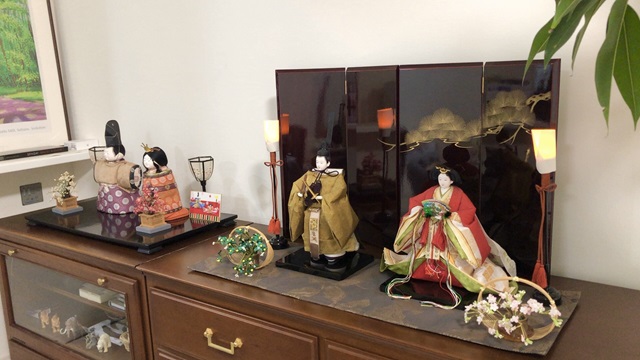
On March 3rd, Japan celebrates Hinamatsuri, also known as Doll’s Festival. As spring begins to approach, homes and shops display elegant dolls dressed in traditional court costumes, creating a gentle and graceful atmosphere.
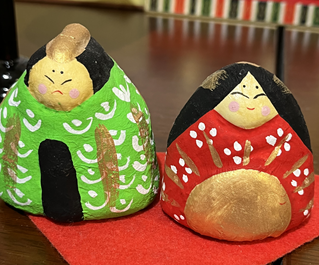
Hinamatsuri has its roots in an old custom of transferring bad luck into paper dolls and setting them afloat on rivers to purify and protect children. Over time, this practice evolved into the tradition of displaying ornamental dolls that represent the imperial court, wishing for the health and happiness of girls.
In our home, we also decorate a few hina dolls during this season and quietly enjoy their presence. It feels like welcoming a small piece of history and spring into our living space.
Is there a similar seasonal tradition in your culture?
Valentine’s Chocolates
Around this time of year in Japan, shops are filled with beautiful chocolates for Valentine’s Day.
Colorful boxes line the shelves, and the atmosphere feels sweet and a little exciting.
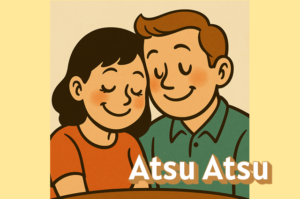
In Japanese culture, February 14th is the day when women give chocolates to men.
For girls who have someone they like, it becomes a special chance to share their feelings.
Some even try making handmade chocolates, hoping their care will be felt.
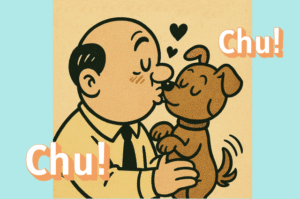
But there’s no strict rule that chocolates are only for romantic feelings.
Many people give them to friends, coworkers, or even buy some for themselves — simply to enjoy the season’s treats.
What is Valentine’s Day like in your country?

The Year Goes, the Year Comes
The last day of the year and the first day of the new one hold a special meaning in Japan.
New Year’s Eve and New Year’s Day mark a gentle boundary between what has passed and what is about to begin.
As the year comes to an end, people look back and feel grateful for having spent the days safely.
At the same time, they quietly wish for another year of health and calm days ahead.
On the final day of the year, it’s customary to eat soba noodles.
The sound of noodles being slurped — zuru zuru — fills the room, carrying a simple hope that life will continue smoothly into the coming year.
When the year turns, the atmosphere becomes shiin.
A fresh silence settles in, as if the new year has just arrived, untouched and new.
Soon after, that quiet is gently broken by voices of celebration — ufufu and wahaha —
as people welcome the beginning of another year together.
As the new year approaches, seasonal decorations begin to appear.
One of them is kadomatsu, placed at the entrances of buildings.
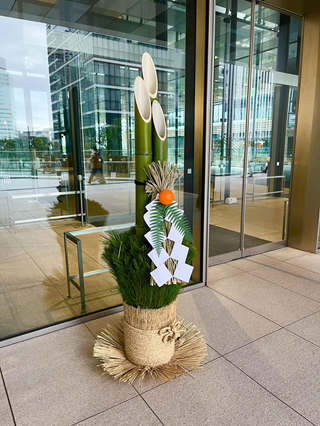
Standing quietly by the doorway, it welcomes the year ahead with calm and respect.

Cultural Mix
By the middle of December, Japanese supermarkets begin to show a small but interesting contrast.
It’s a quiet mix of cultures — Western Christmas and Japanese New Year, standing side by side.
Japan absorbs many cultures throughout the year, but this is the season when the line between wa and yo feels especially clear.
On one side, there’s the Christmas corner.
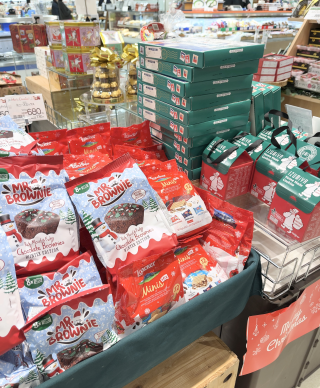
On the other side, the New Year corner appears.
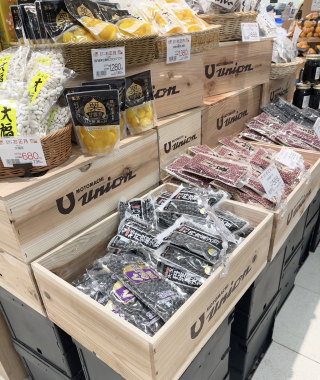
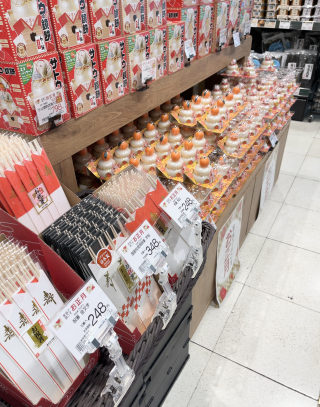
In Japan, the holiday season is clearly divided.
Christmas arrives with feelings of waku waku and kira kira.
New Year feels different — shiin — a time to pause and reset.
Once Christmas ends, the atmosphere shifts quickly, and the country is gently wrapped in a distinctly Japanese calm.
Autumn Leaves
In Yokohama, the ginkgo trees are turning a deep golden yellow, and the leaves fall hira hira and kuru kuru to the ground whenever the wind moves through the street.
The sunlight makes each leaf shine kira kira, so even an ordinary afternoon suddenly feels bright and gentle.
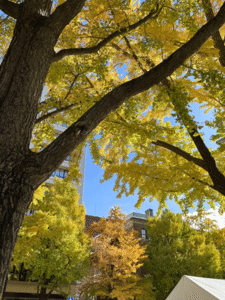
Lately, many people have been visiting the parks and walkways to enjoy the beautiful colors.
The atmosphere becomes a little gaya gaya, with families taking photos, children laughing, and friends walking together under the glowing trees.
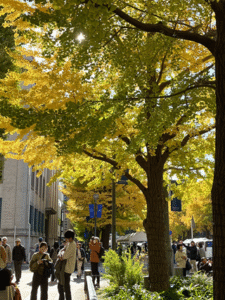
Are the trees in your area turning color too, or has the autumn season already passed?
Christmas Lights
In Japan, Christmas isn’t a religious holiday for most people, but a vibrant winter event. Cities glow kira kira with blue and white lights, creating a quiet, gentle atmosphere.
My city, Yokohama, is shining beautifully with its own Christmas illuminations.
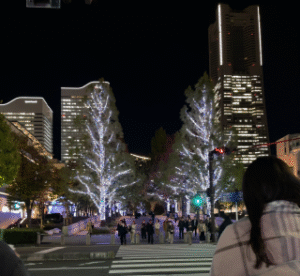
At the same time, the streets feel waku waku and uki uki. Shops play cheerful music, decorations sparkle, and the air becomes lively with a warm kind of excitement.
Personally, I’m still deciding whether to reserve a Christmas cake this year — they get more beautiful every year, and the prices rise just as quickly.
What is Christmas like in your country?