

Sometimes, manga translations use words that don’t seem to match the original Japanese at first glance.
Let’s take a closer look at the original Japanese and discover why this translation works.
At a Glance
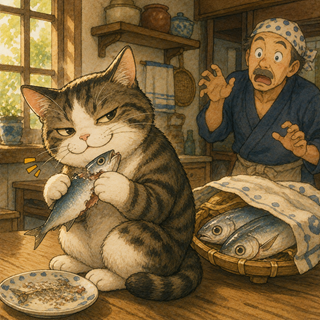
One common English translation for the Japanese manga expression 「にや」 is “smirk.”
| English Translation | Original Japanese |
|---|---|
| Smirk | にや (Niya) |
At first glance, this choice may seem surprising.
After all, 「にや (Niya)」 is an onomatopoeic expression, while “smirk” is an ordinary English verb or noun.
So why do manga translators often choose this word?
The answer lies in the feeling the expression creates rather than its literal form.
Why This Translation?
In Japanese manga, にや (Niya) describes the moment when a small smile appears on someone’s face.
The expression itself doesn’t explain why the person is smiling.
It simply lets readers see the subtle change in the character’s expression.

English, however, usually prefers to describe the kind of smile rather than the action of smiling itself.
The word “smirk” often suggests a smile that is confident, self-satisfied, mischievous, or slightly knowing.
Although the meanings are not identical, both expressions can create a similar impression in the scene.
Rather than translating the word literally, the translator chooses an expression that helps English readers imagine the character’s face in much the same way.

Understanding the Original Japanese
にや (Niya) is a Japanese onomatopoeic expression that describes a subtle smile appearing on someone’s face.
Unlike many English words for smiling, it doesn’t directly describe the person’s personality or intention.
Instead, it simply captures the visible expression.
Depending on the context, にや (Niya) may suggest:
- quiet satisfaction
- confidence
- amusement
- hidden intentions
- playful mischief
Because it focuses on the expression itself, readers are free to interpret the character’s true feelings from the surrounding story.
This flexibility is one reason why にや (Niya) appears so often in manga.

Why This Works
A literal translation of 「にや」 would sound unnatural in English.
Instead of translating the expression word for word, the translator chooses a word that creates a similar impression for English readers.
“Smirk” often conveys the same kind of small, meaningful smile that Japanese readers imagine when they see 「にや」.
Although the two expressions are not exact equivalents, they guide readers toward a similar understanding of the character’s emotions.
This is a good example of how manga translation often aims to recreate the reader’s experience, rather than simply replacing one word with another.







Comments