
Some manga translations may seem surprising at first glance.
Let’s take a closer look at the original Japanese and discover why this translation works.
At a Glance
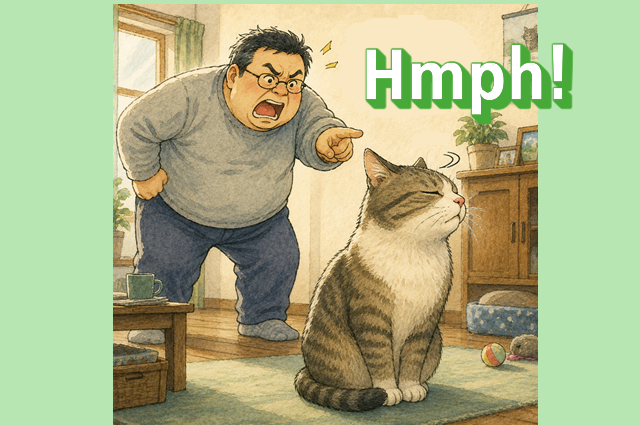
In this manga scene, the Japanese expression ふん! (Fun!) is translated as “Hmph.”

| English Translation | Original Japanese |
|---|---|
| Hmph | ふん! (Fun!) |
Unlike ordinary dialogue, neither expression is really a spoken sentence.
Instead, both represent a brief sound that reveals a character’s emotions.
Although ふん! (Fun!) and “Hmph” are not exact equivalents, they often create a very similar impression for readers.
Why This Translation?
The Japanese expression ふん! (Fun!) is commonly used when a character reacts without saying anything meaningful.
Depending on the situation, it may express:
- annoyance
- dissatisfaction
- pride
- stubbornness
- playful defiance
Rather than explaining what the character is thinking, ふん! (Fun!) lets readers hear the emotion directly.

English uses “Hmph” in much the same way.
It is not a normal word in conversation, but a written expression that suggests someone is reacting with irritation, disbelief, or quiet disapproval.
Instead of translating the character’s thoughts, the translator chooses “Hmph” because it recreates the same emotional moment for English readers.
Understanding the Original Japanese
ふん! (Fun!) is a Japanese expression that represents a short burst of emotion rather than a spoken word.
It often appears when a character reacts instinctively without explaining how they feel.
Depending on the context, ふん! (Fun!) may express:
- annoyance
- frustration
- pride
- stubbornness
- playful defiance
Because it is such a brief emotional reaction, readers naturally understand the character’s feelings from the situation and facial expression.
This makes ふん! (Fun!) a common expression in manga, where even a single sound can reveal a character’s personality.
Why This Works
There is no perfect English equivalent for ふん! (Fun!) .
Instead, the translator chooses a short expression that gives English readers the same emotional impression.
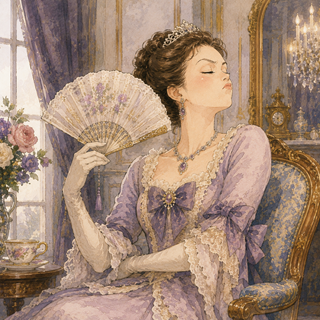
“Hmph” is not an ordinary spoken word. Like ふん! (Fun!) , it represents a spontaneous sound of annoyance, disbelief, or quiet defiance.
Interestingly, “Hmph” and ふん! (Fun!) even sound somewhat alike.
This may be because both languages are trying to represent the same instinctive human vocal reaction rather than a meaningful word.
Although the spellings are completely different, both expressions allow readers to hear the character’s emotions without needing any dialogue.
This is another example of how manga translation recreates a character’s emotional reaction, not just the words on the page.






Comments