
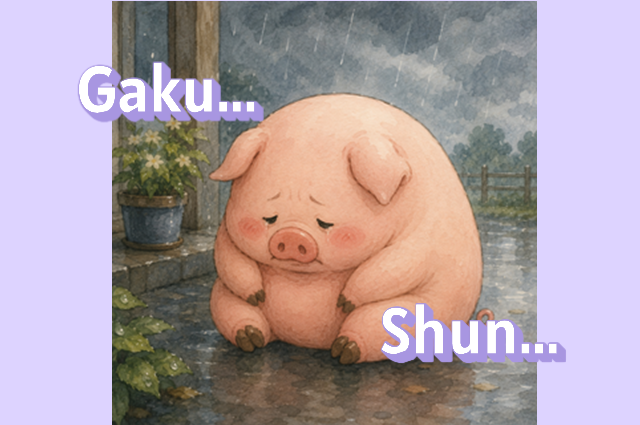
Have you ever been so disappointed that your body suddenly seemed to drop?
Or felt so dejected afterward that your shoulders drooped and all your energy seemed to disappear?
In Japanese, these two reactions to disappointment can be expressed as:
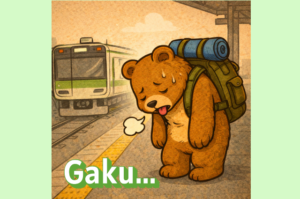
Gaku! (がくっ!)
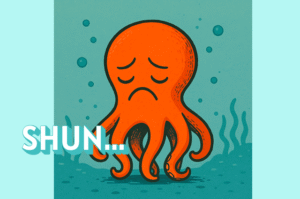
Shun… (しゅん…)
They can both appear when someone is disappointed, but one focuses more on a sudden physical reaction, while the other describes a dejected emotional state.
Differences Between “Gaku!” and “Shun…”
| Expression | Meaning | Nuance |
|---|---|---|
| Gaku! (がくっ!) | A sudden physical drop caused by disappointment | Sudden, physical, momentary |
| Shun… (しゅん…) | Looking or feeling dejected | Quiet, emotional, lingering |
In short:
- Gaku! → disappointment makes the body suddenly drop
- Shun… → disappointment leaves someone looking and feeling dejected
Examples in Daily Life
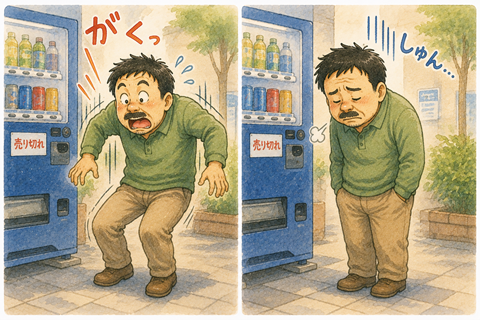
Example 1: Finding the drink sold out (Gaku!)
He went to the vending machine for his favorite drink,
only to discover that it was sold out —
gaku!
His knees bent and his whole body dropped in disappointment.
Example 2: Walking away disappointed (Shun…)
His favorite drink was sold out,
so he stood there with his head down and shoulders drooping —
shun…
Try Using Them!
Something disappointing happens and your body suddenly drops?
→ Say gaku!
Someone looks quiet, small, and dejected after being disappointed?
→ Say shun…
They can come from the same disappointment —
but gaku! captures the sudden drop, while shun… captures the feeling that remains afterward.








Comments