
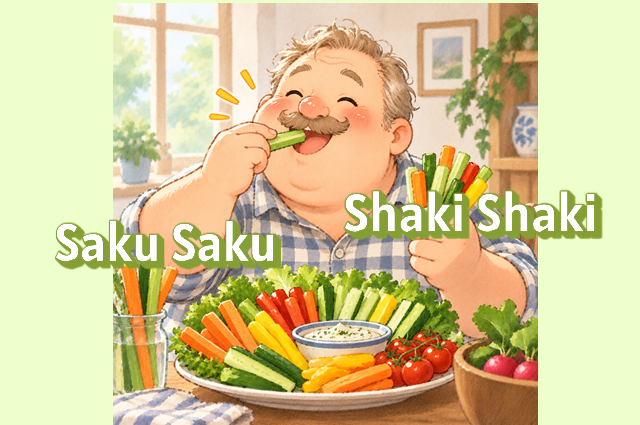
Have you ever bitten into a freshly baked cookie that was light, crisp, and pleasantly crumbly?
Or eaten fresh lettuce that was crisp, juicy, and satisfyingly firm between your teeth?
In Japanese, these two kinds of pleasant crispness can be expressed as:
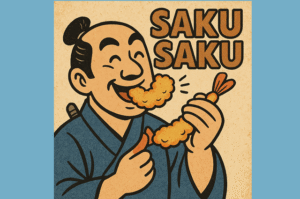
Saku Saku (さくさく)
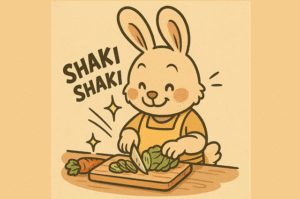
Shaki Shaki (しゃきしゃき)
They can both describe a pleasant crisp texture, but saku saku often feels light, dry, and easy to break or crumble, while shaki shaki suggests a fresh, firm, juicy texture that gives a satisfying bite.

Differences Between “Saku Saku” and “Shaki Shaki”
| Expression | Meaning | Nuance |
|---|---|---|
| Saku Saku (さくさく) | A light, crisp texture that breaks easily | Dry, airy, pleasantly crumbly |
| Shaki Shaki (しゃきしゃき) | A fresh, firm, crisp texture with a satisfying bite | Juicy, firm, fresh, often fibrous |
In short:
- Saku saku → light crispness that breaks or crumbles easily
- Shaki shaki → fresh, juicy crispness with firmness and bite
Examples in Daily Life
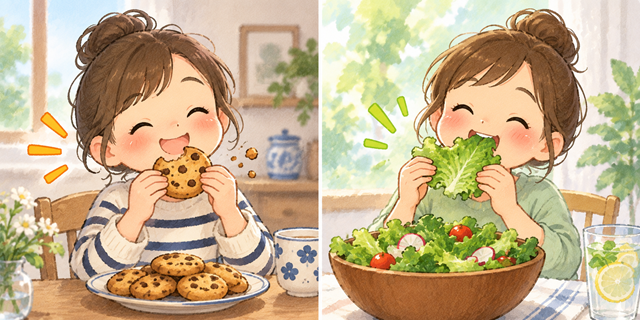
Example 1: Biting into a crisp cookie (Saku Saku)
She took a bite of the freshly baked cookie.
It was light and crisp, breaking pleasantly between her teeth —
saku saku…
Each bite crumbled lightly in her mouth.
Example 2: Eating fresh lettuce (Shaki Shaki)
She bit into a leaf of fresh lettuce.
It was juicy, firm, and satisfyingly crisp —
shaki shaki…
Its fresh, lively crunch made every bite refreshing.
Try Using Them!
A cookie or pie crust that is light, crisp, and breaks easily?
→ Say saku saku
Fresh lettuce or an apple with a juicy, firm, crisp bite?
→ Say shaki shaki
Both can feel wonderfully crisp —
saku saku gives you the feeling of something lightly breaking or crumbling, while shaki shaki gives you the feeling of biting through something fresh, firm, and juicy!










Comments