
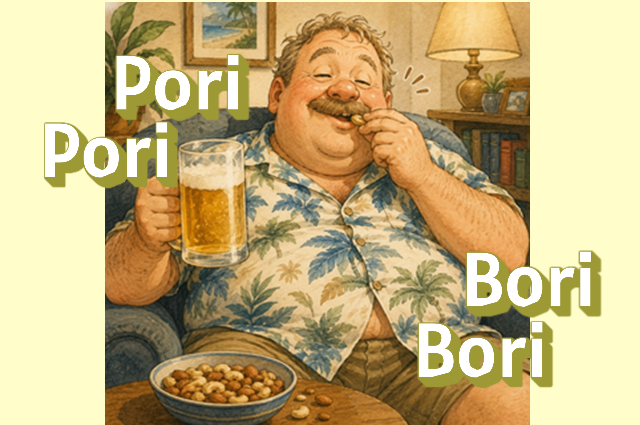
Have you ever eaten a crunchy snack slowly, making small, light sounds with every bite?
Or crunched through a hard snack with big, vigorous bites?
In Japanese, these two kinds of crunchy eating sounds can be expressed as:
Pori Pori (ぽりぽり)
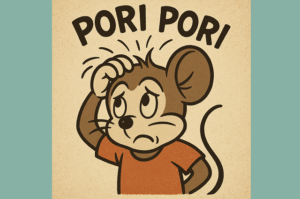
Bori Bori (ぼりぼり)
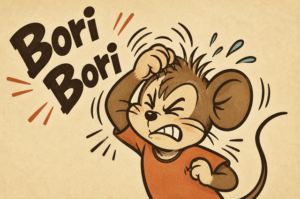
They both describe repeated crunchy sounds, but the strength, loudness, and feeling of the biting are quite different.
Differences Between “Pori Pori” and “Bori Bori”
| Expression | Meaning | Nuance |
|---|---|---|
| Pori Pori (ぽりぽり) | Small, light repeated crunching | Light, crisp, relaxed |
| Bori Bori (ぼりぼり) | Loud, vigorous repeated crunching | Rough, strong, energetic |
In short:
- Pori pori → light, small crunches
- Bori bori → bigger, rougher crunches
Examples in Daily Life
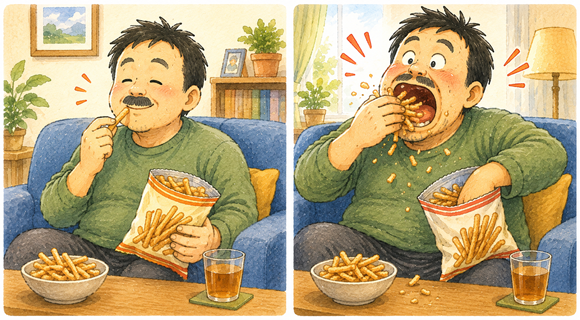
Example 1: Casually eating crunchy snacks (Pori Pori)
He relaxed on the sofa and ate the short, crunchy snacks one at a time,
taking small bites as he enjoyed them —
pori pori…
Example 2: Crunching through the snacks vigorously (Bori Bori)
He grabbed a handful of the hard, crunchy snacks
and munched through them with big, energetic bites —
bori bori!
Try Using Them!
Someone nibbling a hard, crunchy snack with small, light bites?
→ Say pori pori
Someone loudly crunching through something hard with strong bites?
→ Say bori bori
Both are crunchy sounds —
but one feels light and crisp, while the other sounds bigger and rougher!



Comments