

Have you ever gently pressed a baby’s soft cheek and felt it squish under your finger, with a little springiness?
Or picked up a piece of wet paper that had become so soft and limp that it could barely hold its shape?
In Japanese, these two very different kinds of softness can be expressed as:
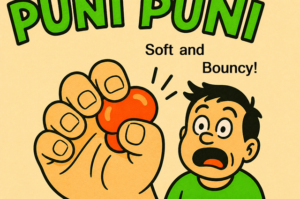
Puni Puni (ぷにぷに)
Funya Funya (ふにゃふにゃ)

They can both describe something soft, but puni puni suggests a soft, squishy texture with elasticity or springiness, while funya funya describes something soft and limp that lacks firmness or support.
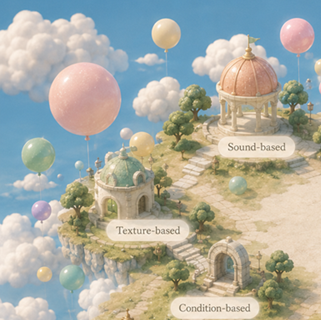
Differences Between “Puni Puni” and “Funya Funya”
| Expression | Meaning | Nuance |
|---|---|---|
| Puni Puni (ぷにぷに) | Soft and squishy with some elasticity | Springy, pleasantly soft, yielding when pressed |
| Funya Funya (ふにゃふにゃ) | Soft and limp with little firmness | Floppy, weak, unable to hold its shape firmly |
In short:
- Puni puni → soft enough to squish when pressed, but with some springiness
- Funya funya → so soft and limp that it has little firmness or support
Examples in Daily Life
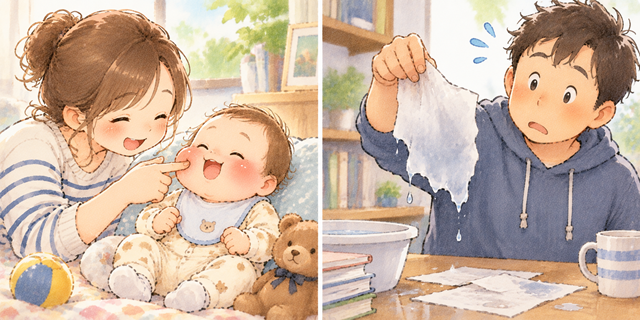
Example 1: Pressing a baby’s soft cheek (Puni Puni)
She gently pressed the baby’s round cheek with one finger.
It squished softly under her touch, with a pleasant little bounce —
puni puni…
The cheek was wonderfully soft, but it still had a gentle springiness to it.
Example 2: A piece of wet paper (Funya Funya)
The paper had become completely soaked with water.
When he picked it up, it drooped softly from his hand —
funya funya…
It had lost its firmness and could no longer hold its original shape.
Try Using Them!
A baby’s cheek that feels soft, squishy, and gently springy when you press it?
→ Say puni puni
Wet paper or another object that has become soft, limp, and unable to hold its shape?
→ Say funya funya
Both describe softness —
puni puni has a soft resilience that responds to your touch, while funya funya has lost the firmness needed to support its own shape.








Comments