
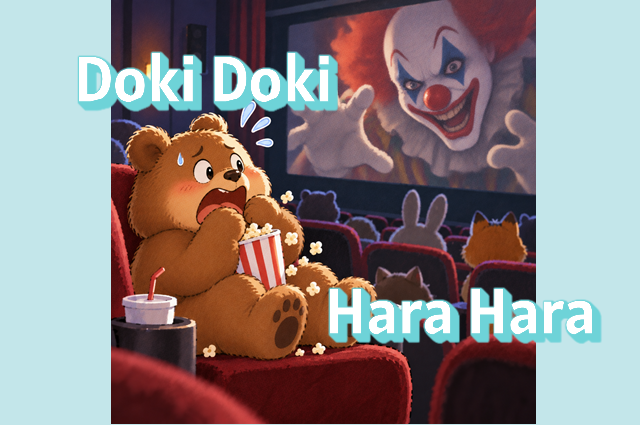
Have you ever felt your heart pounding before an exciting event, a romantic moment, or something that made you nervous?
Or watched someone doing something risky and felt anxious because something might go wrong?
In Japanese, these two kinds of emotional tension can be expressed as:
Doki Doki (どきどき)

Hara Hara (はらはら)

They can both appear in tense or exciting situations, but doki doki focuses more on the feeling of your heart pounding from excitement, nervousness, fear, or romantic attraction, while hara hara focuses more on anxious suspense and worry that something might go wrong.
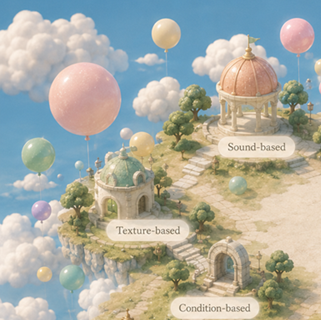
Differences Between “Doki Doki” and “Hara Hara”
| Expression | Meaning | Nuance |
|---|---|---|
| Doki Doki (どきどき) | Your heart pounding from strong emotion | Excitement, nervousness, fear, or romantic attraction |
| Hara Hara (はらはら) | Feeling anxiously worried about what might happen | Suspense, concern, nervous anticipation of something going wrong |
In short:
- Doki doki → your heart is pounding because of a strong emotion
- Hara hara → you’re anxiously watching because something might go wrong
Examples in Daily Life
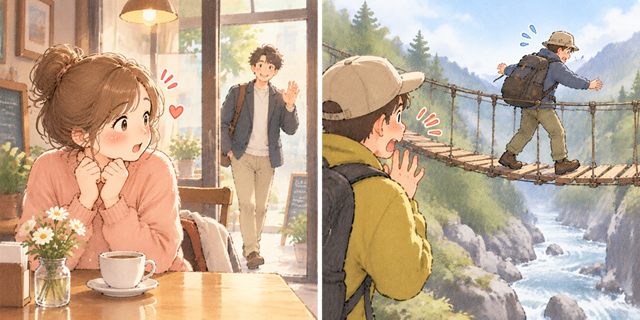
Example 1: Waiting to meet someone special (Doki Doki)
She was waiting to meet someone she really liked.
As the meeting time got closer, her heart began to beat faster —
doki doki…
She was nervous, but also excited to see what would happen.
Example 2: Watching someone cross a narrow bridge (Hara Hara)
He watched his friend carefully walk across a narrow bridge.
One wrong step could make him lose his balance —
hara hara…
He couldn’t relax until his friend reached the other side safely.
Try Using Them!
Your heart is pounding before meeting someone you like?
→ Say doki doki
You’re nervously watching someone do something risky and hoping nothing goes wrong?
→ Say hara hara
Both can happen in a tense situation —
doki doki draws attention to the strong emotion you feel in your own pounding heart, while hara hara draws attention to your anxious concern about what might happen next.







Comments