
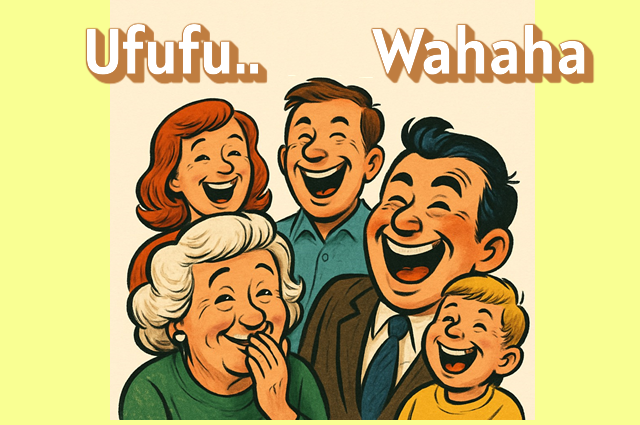
Ever heard someone giggle quietly behind their hand?
Or burst out laughing at a hilarious joke?
In Japanese, both are ways of expressing laughter — but they carry very different vibes:
Ufufu (うふふ)
Wahaha (わはは)
Let’s explore how these sounds reflect character, mood, and cultural nuance.
What is “Ufufu” (うふふ)?
A soft, feminine giggle.
Used for:
- Gentle, modest laughter
- Flirtatious or polite amusement
- Shy or teasing expression
Nuance:
- Elegant, quiet, graceful
- Slightly reserved or mischievous
- Often associated with femininity or cuteness
Example:
She saw his reaction,
and giggled behind her hand —
ufufu…
Pronunciation:
u-fu-fu (light and fluttery)
What is “Wahaha” (わはは)?
A loud, bursting laugh.
Used for:
- Bold, hearty laughter
- Exaggerated comedy or jokes
- Villains or over-the-top characters
Nuance:
- Strong, loud, and open
- Joyful or theatrical
- Often used in manga or comedy scenes
Example:
He couldn’t hold it in,
and burst out laughing —
wahaha!
Pronunciation:
wa-ha-ha (loud and rhythmic)
Cultural Note
In English, you might just say “giggle” or “hahaha.”
But in Japanese, the difference between ufufu and wahaha shows up in personality, tone, and social context:
| Sound | Meaning | Mood / Character |
|---|---|---|
| Ufufu | Light giggle | Feminine, teasing, soft |
| Wahaha | Loud, bursting laughter | Bold, comedic, energetic |
You’ll often see ufufu used for graceful, quiet characters —
while wahaha appears when someone can’t stop laughing, or is being dramatic.
Examples in Daily Life
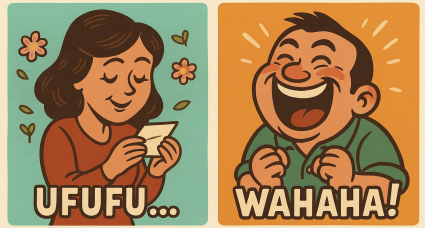
Example 1: Secret delight (Ufufu)
She peeked at the note,
smiled to herself —
ufufu…
Example 2: Big laugh (Wahaha)
The joke was too good,
and he exploded with laughter —
wahaha!
Try Using Them!
Having a sweet little chuckle to yourself?
→ Say ufufu…
Bursting out with laughter at a comedy show?
→ Say wahaha!






Comments