

In English, we describe pleasant textures and smooth progress with words like:
- Crisp
- Crunchy
- Light and flaky
- Running smoothly
- Making good progress
Sometimes it’s about food.
Sometimes it’s about work.
But how does Japanese capture both crisp texture and smooth efficiency with one rhythmic sound?
Let’s step into the world of Japanese onomatopoeia and discover a word that feels light, refreshing, and satisfying.

What Is a “Crisp / Smooth Progress” Moment?
It’s that pleasant sensation when:
- You bite into something light and crunchy
- Your work moves forward without obstacles
- Tasks get done quickly and efficiently
In English, we might say:
- Crisp – Firm and pleasantly crunchy
- Crunchy – Making a satisfying bite sound
- Running smoothly – Progressing without trouble
- Making quick progress – Moving efficiently
Japanese wraps both of these positive sensations into one cheerful rhythm.
How Is This Feeling Expressed in Japanese?
Japanese often uses repeating sounds to express rhythm and flow.
The standout word for this crisp texture and smooth momentum is:
“Saku Saku” (さくさく)
It captures both:
- The light crunch of food
- The smooth, obstacle-free progress of tasks
Let’s feel how it sounds.

What Is Japanese Onomatopoeia “Saku Saku (さくさく)” ?
“Saku Saku” has two main uses:
1. Food Texture
- Apples
- Cookies
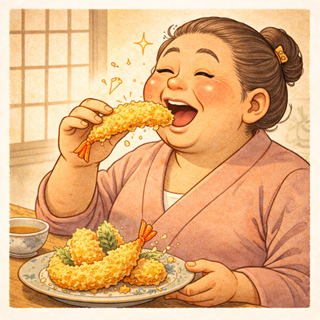
- Tempura
- Pie crust
It describes something crisp, light, and pleasantly easy to bite into — not hard, not heavy.
2. Smooth Progress
- Finishing homework quickly
- Moving through a to-do list
- Work advancing without delays
It’s light.
It’s efficient.
It feels good.
Pronunciation
sah-koo sah-koo
(Say it lightly and crisply — like the sound of crunching something airy.)
Categories
Sound / Texture / Condition
Examples in Daily Life
To learn about how it appears in manga or daily conversation, dive into the following page:
Examples













Comments