
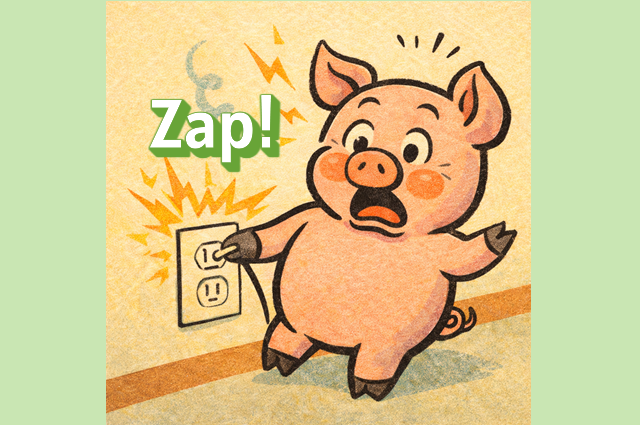
It’s sharp. It’s sudden.
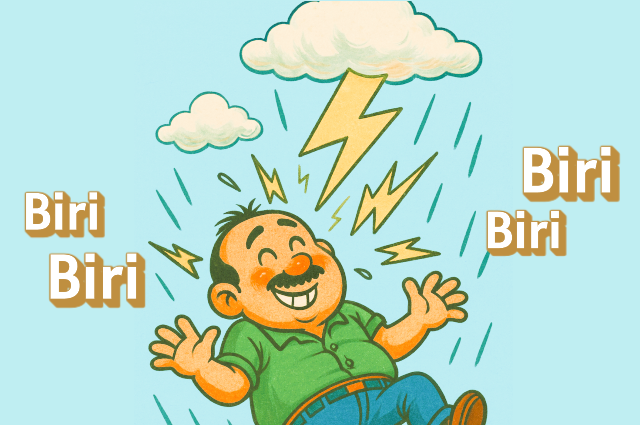
It’s that little zap you feel when you touch a doorknob in winter.
A spark jumps, your skin tingles, and you flinch.
Whether it’s static electricity, spicy food, or comic-style lightning bolts,
this feeling is electric — literally.
English has words like “zap,” “shock,” “buzz,” or even “zing!”
But what if there were a single word that captured the sound, feeling, and motion of that spark?
What Is a “Zap” Moment?
It’s that instant jolt —
a sting, a tingle, or a flash of energy that zaps through your skin.
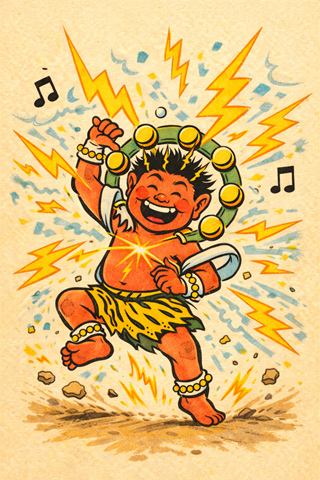
In anime and manga, this happens when:
- a character gets shocked by static electricity
- someone touches a doorknob in winter and jumps
- lightning magic zaps through the screen
- spicy food creates a burning, electric sensation on the tongue
In English, you might hear it described as:
- Zap! – A quick burst of electricity
- Electric Shock – A painful jolt from a current
- Buzz / Jolt / Tingle – Variations of electric sensation
- Zing! – A more playful, exaggerated version
But none of these fully express the texture, emotion, and rhythm of the moment.
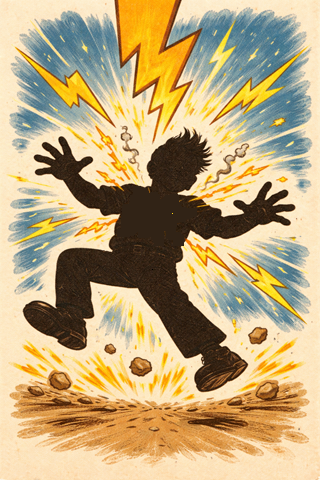
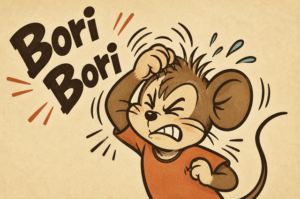
If You Had to Say It in One Word… Try “Biri Biri”
In Japanese, there’s an onomatopoeic expression that captures this sensation perfectly:
biri biri (びりびり) — the feeling of a sharp, tingling zap, whether from electricity, pain, or even spicy food.
It’s one of the many magical sound-based expressions in Japanese known as onomatopoeia,
where words reflect not just meaning, but the very feeling of the moment — crackling, stinging, buzzing.
With “biri biri,” you can describe more than just a shock:
you can talk about emotional tension, zapping spells in games or anime, or even the burn of wasabi.
Wouldn’t it be fun to borrow this expression in English too?
Next time you whisper something, try saying this word —
it’s fun and feels just right.
What Does “Biri Biri” Really Mean?
Want to learn more about its pronunciation, nuance, and how it appears in manga, games, and daily conversation?
Dive into the following page ↓↓↓




Comments