
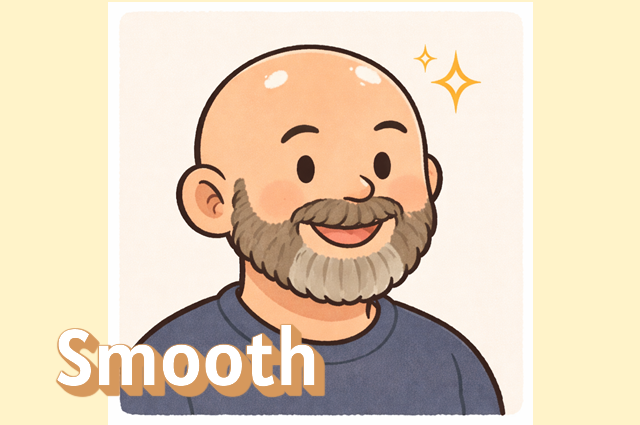
In English, we describe certain surfaces and textures as:
- Smooth
- Silky
- Slippery
- Glossy
Sometimes it’s about touch — like soft skin.
Sometimes it’s about food — like noodles sliding easily.
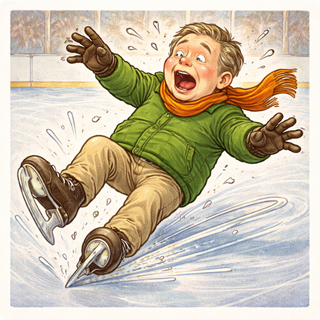
And sometimes… it’s about slipping and falling!
But how does Japanese express that ultra-smooth, shiny, slippery feeling in one rhythmic sound?
Let’s step into the world of Japanese onomatopoeia and discover how smoothness gets its own voice.
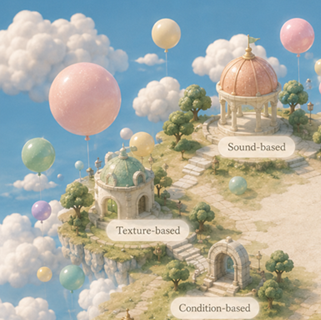
What Is a “Smooth / Slippery” Moment?
It’s the sensation of:
- No friction
- No rough edges
- A glossy, clean surface
- Something sliding effortlessly
In English, we might say:
- Smooth – Even and frictionless
- Silky – Soft and sleek
- Slippery – Hard to grip
- Glossy – Shiny and polished
Japanese captures this feeling with a bright, flowing rhythm.
How Is This Feeling Expressed in Japanese?
Japanese often repeats syllables to express ongoing texture or motion.
The standout word for smooth, shiny, or slippery surfaces is:
“Tsuru Tsuru” (つるつる)
It expresses both:
- Physical smoothness
- Slippery movement
Let’s feel how it sounds.

What Is Japanese Onomatopoeia “Tsuru Tsuru (つるつる)” ?
“Tsuru Tsuru” describes:
1. Texture
- Smooth skin
- Polished stones
- A bald head (smooth and shiny!)
- Glassy surfaces
2. Food
- Slippery noodles (like udon or somen)
- Food that slides easily when eaten
3. Slipping
- Slipping on ice
- Losing footing on a smooth floor
It can describe both the surface — and what happens because of it.
Pronunciation
tsoo-roo tsoo-roo
Categories
Texture / Visual
Examples in Daily Life
To learn about how it appears in manga or daily conversation, dive into the following page:
Examples







Comments