
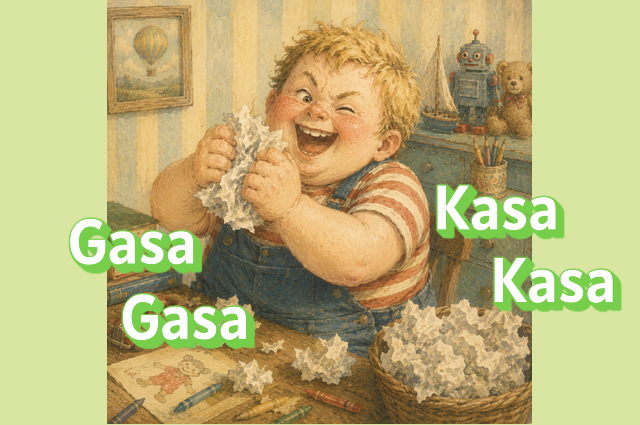
Have you ever heard dry leaves rustling loudly under your feet?
Or touched dry skin that feels rough and lacking moisture?
In Japanese, these two expressions both relate to dryness and roughness — but the intensity and atmosphere are quite different:
Gasa Gasa (がさがさ)
あわせて読みたい

What Does “Gasa Gasa” Mean? The Rustling Word for Sound, Touch, and Chaos in Japanese.
Whether you’re stepping through dry leaves, rummaging through a bag, or describing rough skin, the Japanese onomatopoeia “Gasa Gasa” (がさがさ) captures that…
Kasa Kasa (かさかさ)
あわせて読みたい
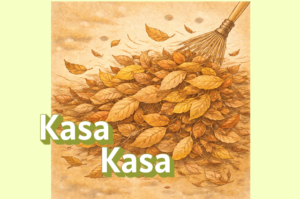
What Is “Kasa Kasa”? The Japanese Sound of Dryness and Light Rustling
Have you heard the soft sound of dried leaves brushing in the wind?Or felt your skin a little too dry after winter air? That’s when the Japanese onomatopoeia…
Both describe dryness or rustling textures, but one feels rough and noisy, while the other feels lighter and drier.
Table of Contents
Differences Between “Gasa Gasa” and “Kasa Kasa”
| Expression | Meaning | Nuance |
|---|---|---|
| Gasa Gasa (がさがさ) | Rough, noisy dryness or rustling | Harsh, messy, loud |
| Kasa Kasa (かさかさ) | Light dry texture or soft rustling | Dry, delicate, lacking moisture |
In short:
- Gasa gasa → rough and noisy dryness
- Kasa kasa → light, dry roughness
Examples in Daily Life
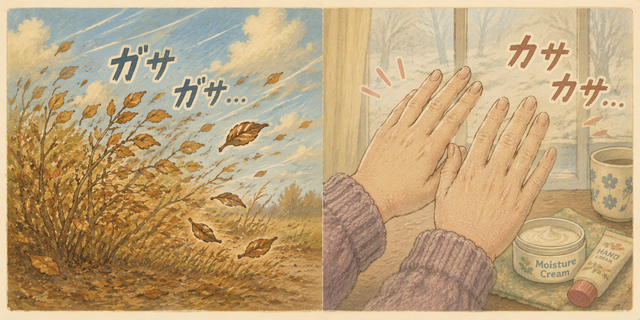
Example 1: Loud rustling leaves (Gasa Gasa)
The dry bushes shook loudly in the wind —
gasa gasa…
Example 2: Dry skin (Kasa Kasa)
After the cold winter air,
her hands became dry and rough —
kasa kasa…
Try Using Them!
Dry leaves making loud rustling sounds or rough messy movement?
→ Say gasa gasa
Dry skin, dry paper, or light rough textures?
→ Say kasa kasa
Both feel dry and rough —
but the intensity and atmosphere are completely different!
More Emotion-based Onomatopoeia:

More Sound-based Onomatopoeia:

More Texture-based Onomatopoeia:





Comments