

Have you ever eaten something spicy that lingers on your tongue?
Or felt a sharp, tingling sensation on your skin?
That continuous, prickly feeling in Japanese is expressed as:
“Piri Piri” (ぴりぴり)
Let’s hear how it sounds!
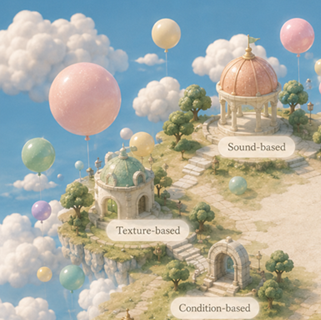
What is “Piri Piri” (ぴりぴり)?
“Piri Piri” describes a sharp, tingling sensation that continues over time.
It’s commonly used for:
- Spicy food that creates a lingering heat
- Skin irritation or a prickling feeling
- Nervous tension in the air (emotional atmosphere)
The key idea is small, repeated sensation that doesn’t go away immediately.

Pronunciation
pee-ree pee-ree
(Say it lightly but sharply — like tiny sparks.)
Categories
Emotion / Condition
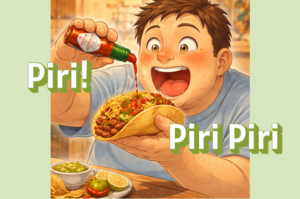
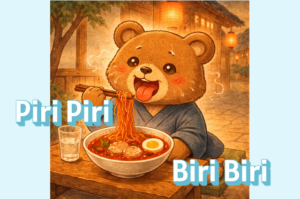
What Does “Piri Piri” Look Like?
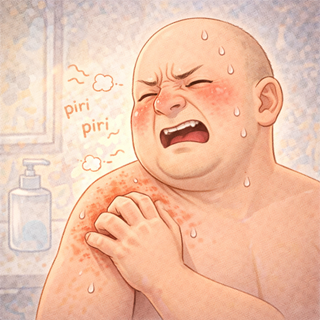
It looks like tiny sparks dancing on your skin.
Like a tongue reacting to spicy food.
Like invisible tension in the air.

How Do You Say It?
Say it in small, quick bursts:
Piri piri…
Like tiny, sharp sensations repeating again and again.
Examples in Daily Life
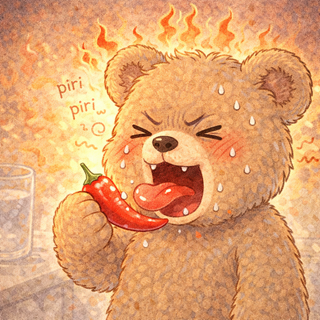
Example 1: Spicy food
He took a bite of the chili.
His tongue started to tingle —
piri piri…
Example 2: Skin irritation
After using the new lotion,
her skin felt strange —
piri piri.
Cultural Note
In English, you might say:
- “Tingling”
- “Stinging”
- “Spicy kick”
But “piri piri” is very flexible.
It can describe:
Physical sensation (skin, tongue)
Emotional atmosphere (tense, on edge)
Watch & Feel the “Piri Piri” World!
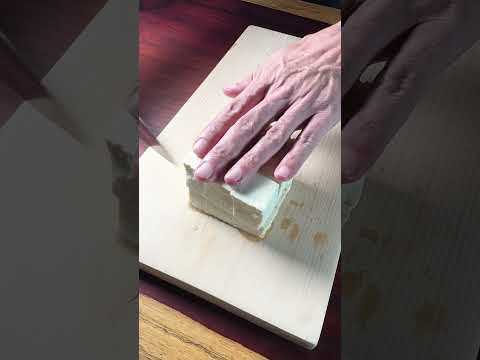
Feel the “Piri Piri” — Mapo Tofu
Try Using It!
When something feels slightly painful or spicy…
When your skin tingles…
When the atmosphere feels tense…
Say it lightly:
Piri piri〜






Comments