
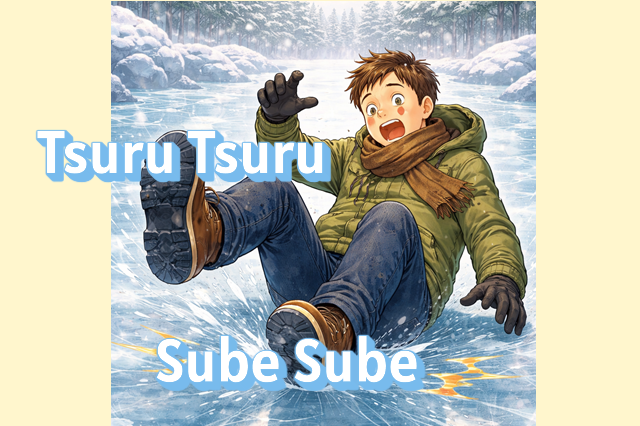
Have you ever touched skin that feels soft and smooth?
Or walked on a surface so smooth you almost slipped?
In Japanese, these similar sensations are expressed with two different sounds:
Tsuru Tsuru (つるつる)
あわせて読みたい

What Does “Tsuru Tsuru” Mean? The Japanese Onomatopoeia for Smoothness and Shine
If you’ve ever touched something silky smooth, seen shiny skin after a bath, or watched slippery noodles glide down a bowl —the Japanese onomatopoeia “Tsuru …
Sube Sube (すべすべ)
あわせて読みたい

What Is “Sube Sube”? The Japanese Sound of Smooth, Soft Skin
Have you ever touched skin that feels soft and perfectly smooth? Or noticed how your hands feel after using lotion? That gentle, pleasant smoothness in Japan…
They both mean “smooth,”
but the feeling behind them is surprisingly different.

Table of Contents
Differences Between Tsuru Tsuru and Sube Sube

| Expression | Meaning | Key Feeling |
|---|---|---|
| Tsuru Tsuru (つるつる) | Smooth, shiny, sometimes slippery | Visual smoothness + Slipperiness Noodles, shiny surfaces, slippery floors |
| Sube Sube (すべすべ) | Smooth and soft to the touch | Gentle, pleasant touch Skin, hands, soft surfaces |
In short:
- Tsuru tsuru → smooth and possibly slippery
- Sube sube → soft, smooth, and pleasant to touch
Examples in Daily Life
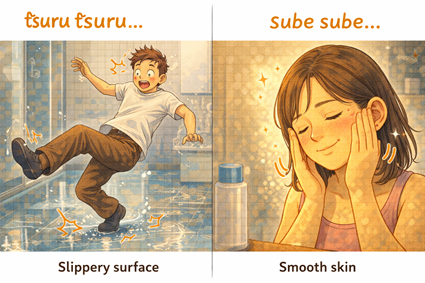
Example 1: Slippery surface (Tsuru Tsuru)
The floor was wet and shiny —
he almost slipped!
tsuru tsuru…
Example 2: Smooth skin (Sube Sube)
After using lotion,
her skin felt so soft —
sube sube…
Try Using Them!
Talking about something shiny or slippery? → Say tsuru tsuru
Talking about soft, smooth skin? → Say sube sube
Two “smooth” sounds —
but completely different feelings!
Explore More: Comparison Series








Comments