
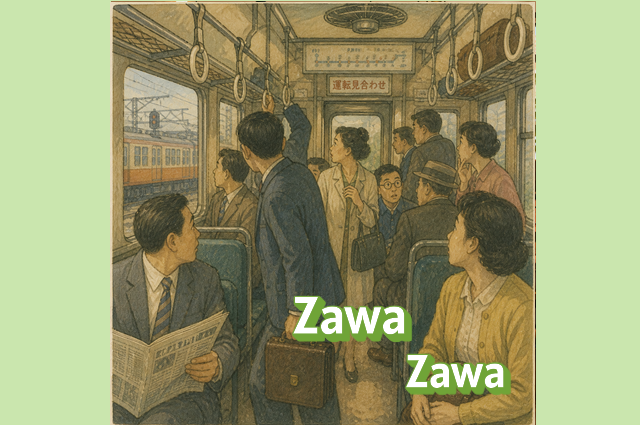
In English, we describe subtle, restless sounds and feelings as:
- Murmur
- Buzz
- Rustling
- A strange feeling in the air
It’s not loud.
It’s not clear.
It’s that low, spreading sense that something is happening —
in the air, in a crowd, or inside your chest.
But how does Japanese capture that restless, murmuring atmosphere with a repeating rhythm?
Let’s step into the world of Japanese onomatopoeia and discover the sound of unease.
What Is a “Restless / Murmuring” Moment?
It’s when:
- A crowd starts whispering
- Leaves rustle in the wind
- Something feels off deep inside
- The atmosphere becomes tense or uneasy

In English, we might say:
- Murmur – Soft, continuous talking
- Buzz – Low, collective noise
- Rustle – Light movement of leaves or fabric
- Uneasy feeling – A sense of tension or discomfort
But Japanese blends sound and emotion into one expression.
How Is This Feeling Expressed in Japanese?
Japanese often uses repeating sounds to express subtle, spreading sensations.
The standout word for a restless, murmuring state is:
“Zawa Zawa” (ざわざわ)
It captures both external noise and internal unease.
Let’s feel how it sounds.
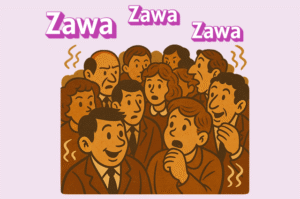
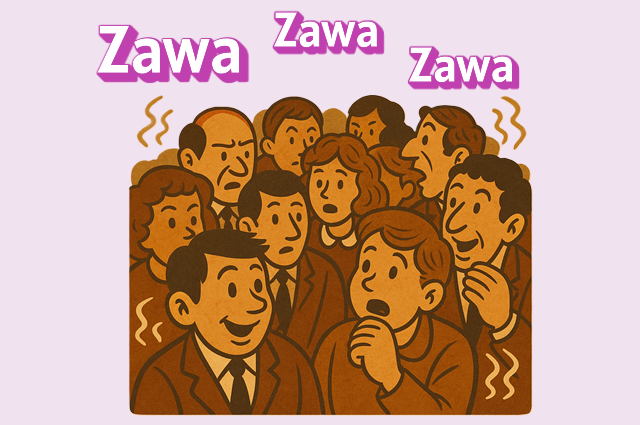
What Is Japanese Onomatopoeia “Zawa Zawa (ざわざわ)” ?
“Zawa Zawa” describes:
Crowd Murmuring
- People talking quietly in groups
- A room filled with low conversation
- Growing noise before something happens
Restless Emotion
- A vague sense of unease
- Nervous anticipation
- Something not quite right
Natural Movement
- Leaves rustling
- Wind moving softly through trees
- Subtle movement in the environment
It’s not sharp like “gusa!”
Not clear like “bata bata.”
It’s spreading.
Quiet.
Unclear.
But definitely there.
Pronunciation
zah-wah zah-wah
(Say it softly but with movement, like a wave of quiet voices rising and falling.)
Categories
Sound / Emotion
Examples in Daily Life
To learn about how it appears in manga or daily conversation, dive into the following page:
Examples











Comments