
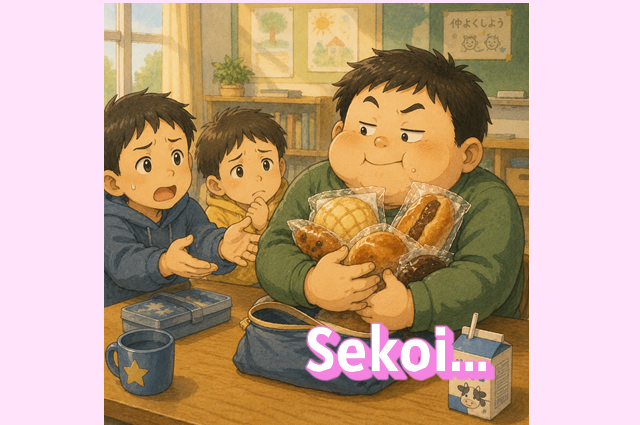
Have you ever met someone who complains over tiny amounts of money?
Or someone who always looks for the smallest personal advantage?
In Japanese, that slightly mean or petty attitude is often described as:
“Sekoi” (せこい)
Let’s hear how it sounds!

What is “Sekoi” (せこい)?
“Sekoi” describes:
- Being stingy or petty
- Caring too much about small personal gains
- Acting in a narrow-minded or cheap way
It’s usually a mild criticism, often used with a laugh rather than serious anger.
Pronunciation
seh-koh-ee
(Say it with a little sigh of disappointment.)
Categories
Condition / Emotion
What Does “Sekoi” Look Like?
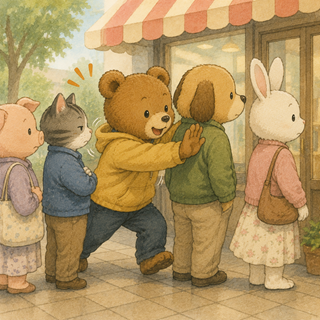
It looks like someone arguing over a tiny discount.
Someone counting every last coin.
Someone trying to get a little advantage at someone else’s expense.

How Do You Say It?
Say it with a playful smile:
Sekoi…
Like gently teasing someone for being a little too petty.
Example in Daily Life
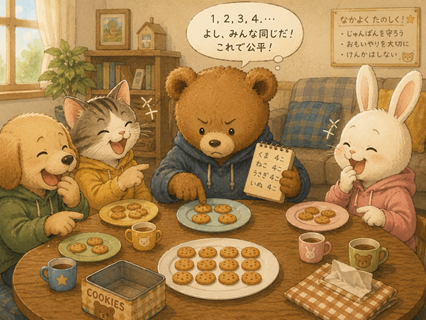
Example: Sharing snacks
He counted the cookies to make sure no one got more than he did —
sekoi…
His friends couldn’t help laughing.
Cultural Note
In English, you might say:
- “Stingy”
- “Petty”
- “Cheap”
But “sekoi” often feels lighter and more playful than these English words.
Interestingly, although “sekoi” is not an onomatopoeia, many Japanese people naturally connect it with “seko seko,” a word describing someone fussing over small gains.
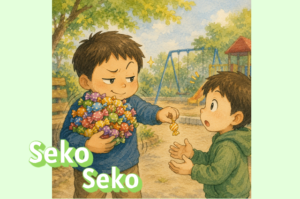
It’s a fun example of how Japanese sound-symbolic expressions can influence everyday vocabulary.
It suggests:
Small-mindedness
Petty behavior
A focus on tiny personal advantages
Compared with similar expressions:
- Seko Seko → fussing over small gains
- Sekoi → a person with that kind of attitude
- Chima Chima → fussing over small details
Try Using It!
When someone worries too much about tiny advantages…
When a friend acts a little stingy…
When someone is being just a bit too petty…
Say it with a grin:
Sekoi…
Sometimes it’s more teasing than criticizing.










Comments