
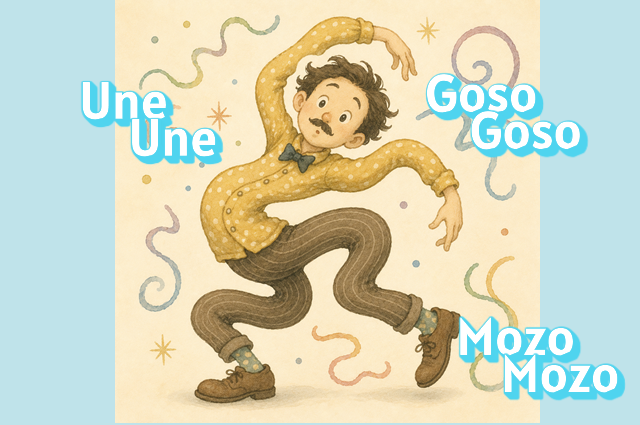
Have you ever seen a snake slither across the ground?
Or someone squirm under a blanket?
Or a person quietly searching through a drawer?
In Japanese, these movements are expressed with three different sounds:
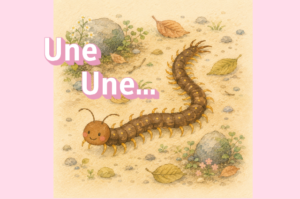
Une Une (うねうね)
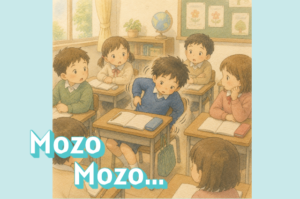
Mozo Mozo (もぞもぞ)
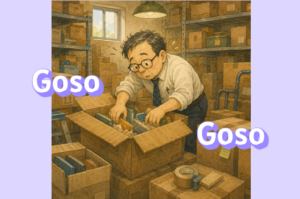
Goso Goso (ごそごそ)
All three involve movement, but they describe very different kinds of activity.
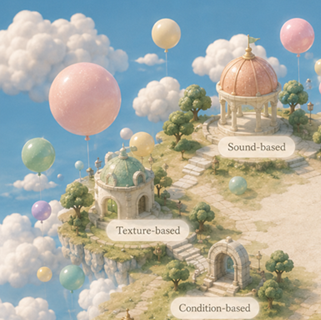
Differences Between “Une Une,” “Mozo Mozo,” and “Goso Goso”
| Expression | Focus | Nuance |
|---|---|---|
| Une Une | Wave-like movement | Long, winding, often creepy |
| Mozo Mozo | Small body movements | Squirming, restless, fidgeting |
| Goso Goso | Busy little activities | Rummaging, searching, rustling |
In short:
- Une une → moving in waves
- Mozo mozo → squirming around
- Goso goso → quietly searching or doing small tasks
Examples in Daily Life
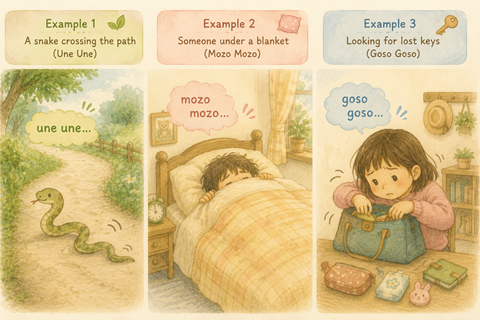
Example 1: A snake crossing the path (Une Une)
A snake slowly crossed the road —
une une…
Example 2: Someone under a blanket (Mozo Mozo)
He wasn’t ready to wake up and stayed under the blanket —
mozo mozo…
Example 3: Looking for lost keys (Goso Goso)
She searched through her bag for her keys —
goso goso…
A Japanese Perspective
These three expressions all involve movement, but they answer different questions.
Une une describes how something moves.
Mozo mozo describes how a living thing fidgets or squirms.
Goso goso describes what someone is quietly doing.
Japanese often pays attention not only to movement itself, but also to its purpose and feeling.
Try Using Them!
A long body moves in smooth curves?
→ Say une une
Someone squirms or fidgets?
→ Say mozo mozo
Someone quietly searches or busily moves things around?
→ Say goso goso
A snake moves une une.
A sleepy person moves mozo mozo.
A person looking for something moves goso goso.
Three different movements.
Three different points of view.
That’s part of the fun of Japanese onomatopoeia!









Comments