
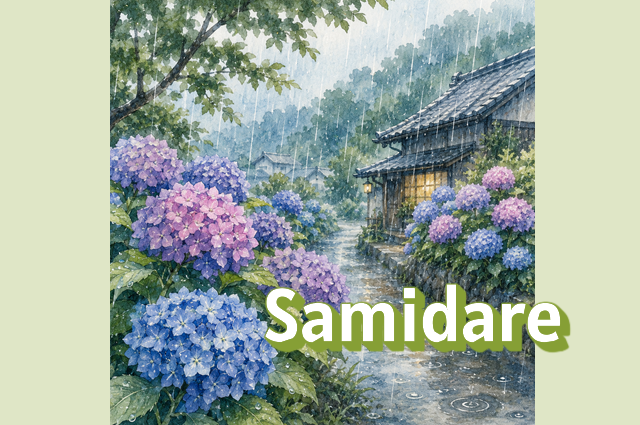
Rain falling during Japan’s rainy season.
That is one way to describe samidare (さみだれ/五月雨).
But that definition alone does not fully explain the word.
After all, rain falls in many places around the world.
Why did Japanese people think this particular kind of rain was important enough to give it a name?
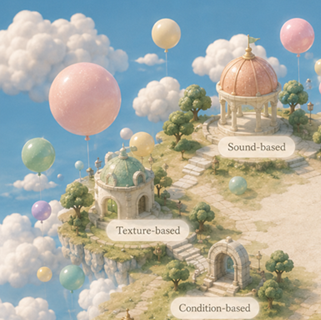
A Word That Means More Than Its Definition
The word samidare literally means “fifth-month rain.”
At first glance, this may sound like rain that falls in May.
However, the word comes from the traditional Japanese calendar.
In the old calendar, the fifth month roughly corresponds to today’s June and early July.
In other words, samidare refers to the rain of Japan’s rainy season.
Yet Japanese people do not simply imagine rainfall when they hear this word.
The word often evokes:
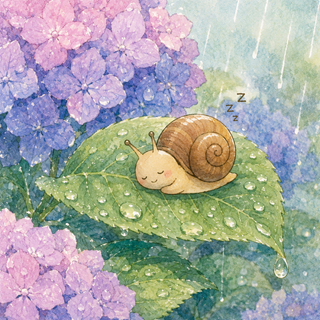
- hydrangeas blooming beside a path
- raindrops on green leaves
- cloudy skies that last for days
- a season quietly moving toward summer
In that sense, samidare is not just rain.
It is a season.
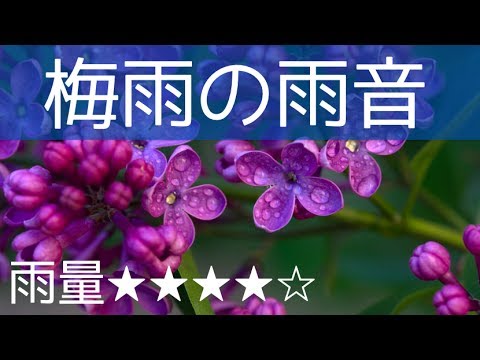
The Onomatopoeic Feelings Hidden Inside
Samidare is not an onomatopoeia.
Yet it can be understood through onomatopoeic feelings.
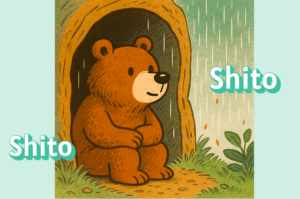
Shito Shito (しとしと)
Gentle rain falling steadily.
Potsu Potsu (ぽつぽつ)
The first drops beginning to fall.
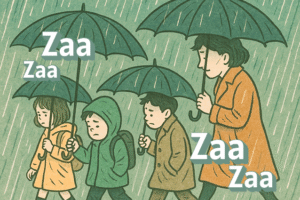
Zaa Zaa (ざあざあ)
Rainwater flowing along streets and paths.
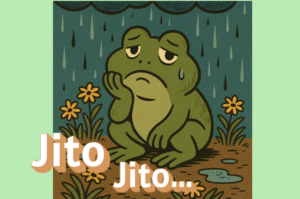
Jime Jime (じめじめ)
The humid feeling that often accompanies the rainy season.
Together, these feelings help create the atmosphere hidden inside the word samidare.
More Than Bad Weather
Many people think of rain as something inconvenient.
Yet traditional Japanese culture often treats rain differently.
Rain can slow the world down.
It changes colors, sounds, and moods.
A rainy day invites people to notice things that might otherwise be overlooked.
The sound of drops on leaves.
The reflection of trees in a puddle.
The bright color of hydrangeas against a gray sky.
Perhaps this is one reason why samidare became a cherished seasonal word.
Why Did Japanese People Give This Moment a Name?
The rainy season returns every year.
Yet no two rainy days feel exactly the same.
Sometimes the rain falls softly.
Sometimes it continues for days.
Sometimes it creates moments of unexpected beauty.
Perhaps Japanese people thought these days were worth noticing.
And perhaps they thought they were worth naming.
What Does Samidare Tell Us About Japan?
Many Japanese words describe not only an object, but an atmosphere.
Samidare is one of them.
The word does not simply mean rain.
It carries:
- sounds
- humidity
- colors
- seasons
- memories
In that sense, samidare is a reminder that even an ordinary rainy day can become something memorable.
Final Thought
Samidare means rain that falls during Japan’s rainy season.
But that is only the beginning.
The real meaning may be found in the feelings hidden inside the season:
shito shito…
potsu potsu…
jito jito…
Perhaps that is why Japanese people thought this rain was important enough to give it a name.





Comments