
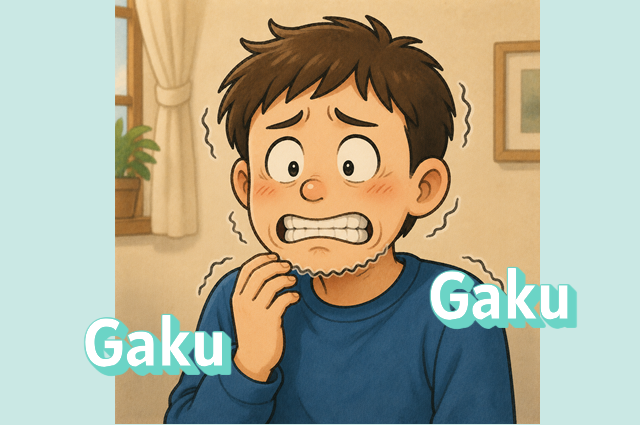
Have you ever been so nervous that your knees started shaking?
Or sat on a chair with a wobbly leg?
That unsteady, shaky feeling in Japanese is expressed as:
“Gaku Gaku” (がくがく)
Let’s hear how it sounds!
What is “Gaku Gaku” (がくがく)?
“Gaku Gaku” describes:
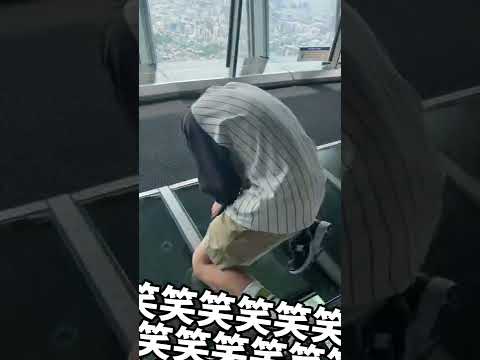
- Legs or knees shaking from nervousness or exhaustion
- Something wobbling because it is unstable
- A loss of strength or steady support
It often suggests weakness, instability, or trembling.
Pronunciation
gah-koo gah-koo
(Say it with a slightly shaky rhythm.)
Categories
Motion / Emotion
What Does “Gaku Gaku” Look Like?
It looks like tired legs after a long climb.
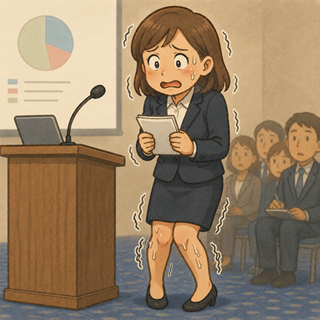
A nervous performer before going on stage.
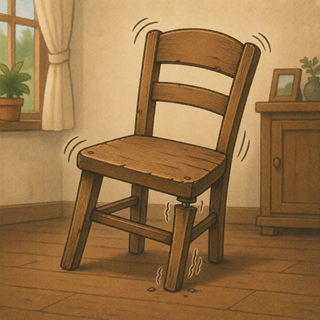
A chair with a loose leg that won’t stay steady.

How Do You Say It?
Say it with a trembling rhythm:
Gaku gaku…
Like something struggling to stay steady.
Examples in Daily Life
Example 1: Shaky legs
Before the big presentation, her knees started shaking —
gaku gaku…
She was trying hard to stay calm.
Example 2: A wobbly chair
The old chair rocked every time someone sat down —
gaku gaku…
One of its legs was loose and unsteady.
Cultural Note
In English, you might say:
- “Shaky”
- “Wobbly”
- “Weak in the knees”
But “gaku gaku” can describe both a person’s body and an unstable object.
Japanese often extends the same physical feeling to both people and things.
It suggests:
Trembling
Instability
Loss of strength
Compared with similar expressions:
- Gata Gata → rattling and clattering
- Gaku Gaku → shaky and unstable
- Gachi Gachi → stiff and rock hard
Watch & Feel the “Gaku Gaku” World!
Feel the “Gaku Gaku” — Acrophobia
Try Using It!
When your knees start shaking from nervousness…
When your legs feel weak after a long climb…
When a chair or table wobbles because it’s unstable…
Say it naturally:
Gaku gaku…
Like something trying hard to stay steady but just can’t.
More Emotion-based Onomatopoeia








Comments