
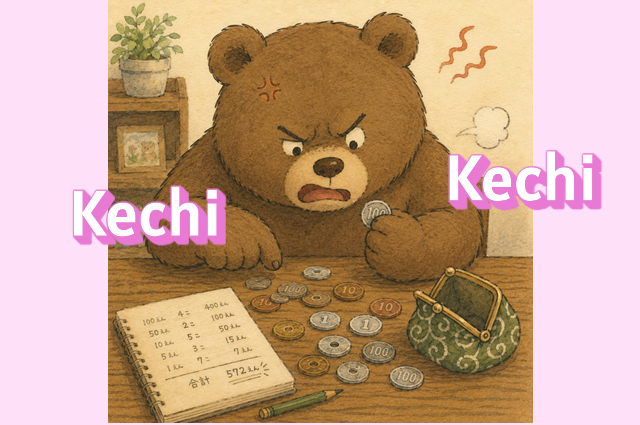
Have you ever met someone who hates spending money?
Or someone who carefully saves every little thing?
That stingy, tight-fisted attitude in Japanese is often expressed as:
“Kechi Kechi” (けちけち)
Let’s hear how it sounds!
What is “Kechi Kechi” (けちけち)?
“Kechi Kechi” describes:
- Being unwilling to spend money
- Trying to save every little bit
- Acting in a stingy or tight-fisted way
It often sounds playful rather than seriously insulting.
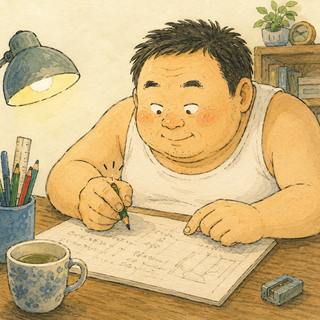
Pronunciation
keh-chee keh-chee
(Say it with a slightly teasing tone.)
Categories
Condition
What Does “Kechi Kechi” Look Like?
It looks like someone counting coins.
Saving tiny leftovers for later.
Thinking twice before spending even a little money.

How Do You Say It?
Say it with a friendly grin:
Kechi kechi…
Like gently teasing someone for being a little too careful with money.
Example in Daily Life
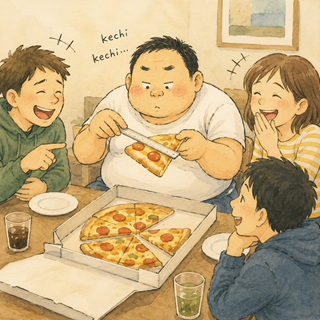
Example: Sharing pizza
He measured every slice to make sure nobody got more than he did —
kechi kechi…
His friends laughed at how careful he was.
Cultural Note
In English, you might say:
- “Stingy”
- “Tight-fisted”
- “Cheap”
But “kechi kechi” is often used jokingly among friends and family.
It can describe someone who simply doesn’t like wasting money, not necessarily a bad person.
It suggests:
Saving money
Being careful
A slightly stingy personality
Compared with similar expressions:
- Seko Seko → chasing small gains
- Kechi Kechi → unwilling to spend
- Sekoi → a petty or stingy attitude
Try Using It!
When someone doesn’t want to share…
When a friend is a little too careful with money…
When someone hates spending even a tiny amount…
Say it with a smile:
Kechi kechi…
Sometimes it’s just a funny way to tease someone for being a little stingy.






Comments