
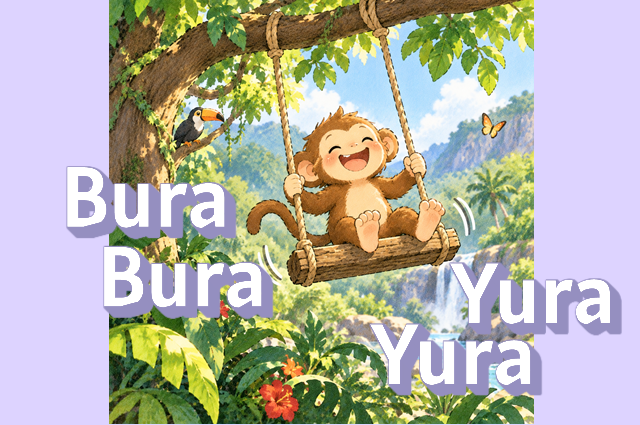
Have you ever seen a bag hanging from a tree branch and swinging back and forth under its own weight?
Or watched a small boat gently swaying on the surface of the water?
In Japanese, these two different kinds of swinging and swaying can be expressed as:
Bura Bura (ぶらぶら)

Yura Yura (ゆらゆら)
They can both describe something moving back and forth, but bura bura often describes something hanging down and swinging from a point of support, while yura yura focuses more on a slow, gentle swaying motion and does not require something to be hanging.
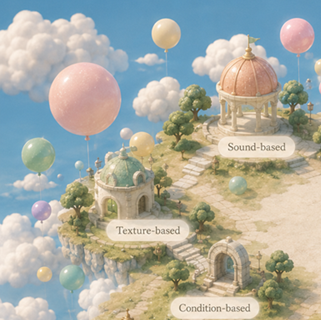
Differences Between “Bura Bura” and “Yura Yura”
| Expression | Meaning | Nuance |
|---|---|---|
| Bura Bura (ぶらぶら) | Hanging down and swinging back and forth | A point of support, gravity, and the weight of the hanging object are often noticeable |
| Yura Yura (ゆらゆら) | Swaying slowly and gently | Soft, unsteady, flowing movement without emphasizing weight |
In short:
- Bura bura → something hangs down and swings from a point of support
- Yura yura → something gently sways, whether it is hanging or not
Examples in Daily Life
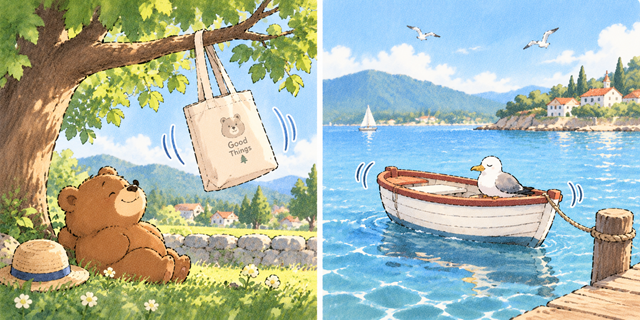
Example 1: A bag hanging from a tree branch (Bura Bura)
A bag was hanging from a low tree branch.
As the wind blew, it swung back and forth below the branch —
bura bura…
Its weight pulled it downward as it swung from side to side.
Example 2: A small boat on the water (Yura Yura)
A small boat floated quietly on the water.
With each gentle wave, it slowly swayed from side to side —
yura yura…
It moved softly with the rhythm of the water.
Try Using Them!
Something hanging down and swinging back and forth under its own weight?
→ Say bura bura
A boat, flame, or other object slowly and gently swaying?
→ Say yura yura
Both describe movement from side to side —
bura bura often makes you notice something hanging and swinging under gravity, while yura yura focuses on the gentle swaying motion itself, whether the object is hanging or not.






Comments