
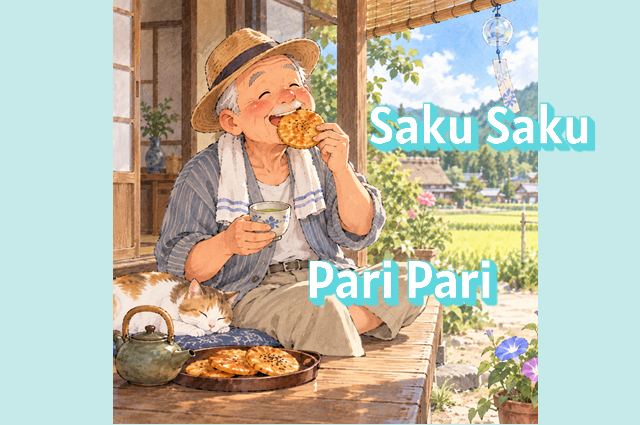
Have you ever bitten into a thick cookie that was light and crisp, crumbling pleasantly in your mouth?
Or bitten into a thin potato chip that snapped sharply between your teeth?
In Japanese, these two kinds of crisp texture can be expressed as:
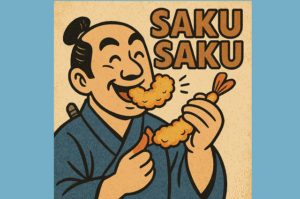
Saku Saku (さくさく)
Pari Pari (ぱりぱり)
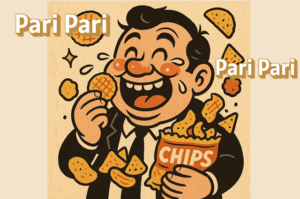
They can both describe pleasantly crisp food, but saku saku often focuses on a light texture that breaks and crumbles easily as you bite through it, while pari pari often describes something thin and crisp that snaps or cracks sharply.

Differences Between “Saku Saku” and “Pari Pari”
| Expression | Meaning | Nuance |
|---|---|---|
| Saku Saku (さくさく) | A light, crisp texture that breaks and crumbles easily | Light, airy, crumbly, often with some thickness |
| Pari Pari (ぱりぱり) | A thin, crisp texture that snaps or cracks | Thin, firm, brittle, with a sharper break |
In short:
- Saku saku → light crispness that breaks and crumbles as you bite through it
- Pari pari → thin, firm crispness that snaps or cracks sharply
Examples in Daily Life

Example 1: Biting into a thick, crisp cookie (Saku Saku)
She took a bite of the freshly baked cookie.
It was thick but light, breaking into little crumbs as she bit through it —
saku saku…
The whole cookie crumbled lightly and pleasantly with each bite.
Example 2: Biting into a thin potato chip (Pari Pari)
She picked up a thin potato chip and bit into it.
The crisp surface snapped sharply between her teeth —
pari pari…
The thin chip broke with a light, sharp crack.
Try Using Them!
A cookie, pie, or fried coating that feels light and crisp and crumbles as you bite through it?
→ Say saku saku
A potato chip, sheet of nori, or other thin food that snaps or cracks crisply when you bite it?
→ Say pari pari
Both can describe deliciously crisp food —
saku saku makes you notice how something lightly breaks and crumbles, while pari pari makes you notice the sharper snap or crack of a thin, crisp layer.










Comments