
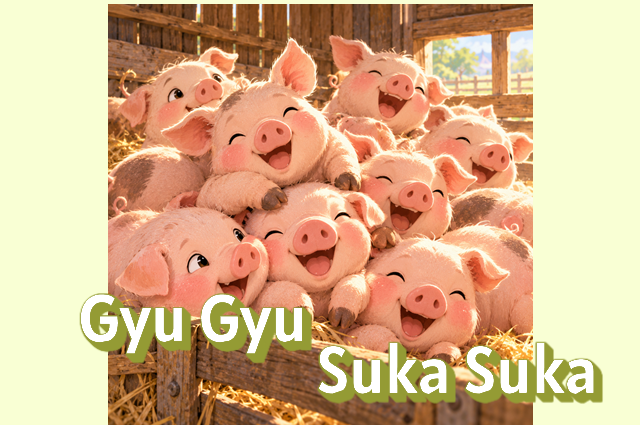
Have you ever stepped onto a train and found so few passengers that there was plenty of empty space around you?
Or squeezed into a rush-hour train so crowded that you could barely move?
In Japanese, these two very different experiences can be expressed as:
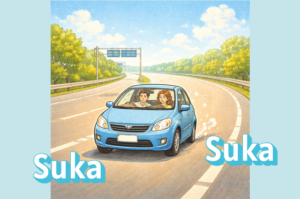
Suka Suka (すかすか)
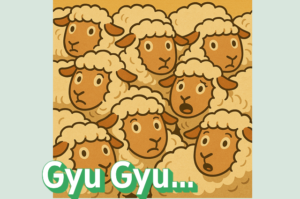
Gyu Gyu (ぎゅうぎゅう)
Both expressions describe how much space is occupied, but they capture opposite conditions. Suka suka emphasizes emptiness and a lack of density, while gyu gyu emphasizes tight packing and the pressure of things being squeezed together.
Differences Between “Suka Suka” and “Gyu Gyu”
| Expression | Meaning | Nuance |
|---|---|---|
| Suka Suka (すかすか) | Sparsely filled, with plenty of empty space | Low density, noticeable gaps, a lack of people or things |
| Gyu Gyu (ぎゅうぎゅう) | Tightly packed, with almost no room left | High density, close contact, pressure from being crowded together |
In short:
- Suka suka → so little inside that empty space stands out
- Gyu gyu → so much inside that everything is pressed together
Examples in Daily Life
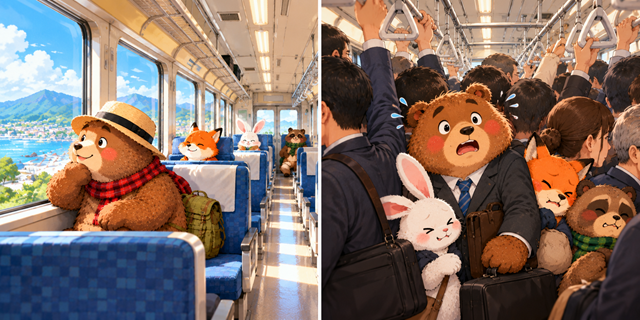
Example 1: A nearly empty train (Suka Suka)
She boarded a train in the middle of the day.
There were only a few passengers, with empty seats and plenty of space between them —
suka suka…
Example 2: A packed rush-hour train (Gyu Gyu)
He boarded a train during the morning rush hour.
Passengers stood shoulder to shoulder, pressed so tightly together that he could barely move —
gyu gyu!
Try Using Them!

A train with only a few passengers and lots of empty space?
→ Say suka suka
A rush-hour train packed so tightly that passengers can hardly move?
→ Say gyu gyu
The same train can feel completely different depending on how many people are inside —
suka suka draws your attention to the empty space, while gyu gyu makes you feel the pressure of a space filled to its limit!








Comments