
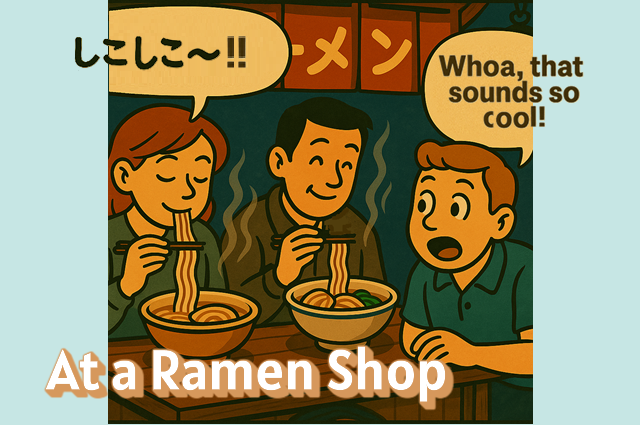
Japanese is full of sound words — fun, vivid, and packed with feeling.
Especially at a ramen shop, these expressions help you describe flavors, textures, and even spiciness in a way that sounds truly local.
And here’s the fun part:
If you casually say these sound words while enjoying your bowl…
the staff might smile, and you’ll sound just like a ramen-loving local.
We’ll start with texture and heat words in this post — then in the next section, we’ll explore ramen flavor profiles (like shōyu, shio, miso) and regional ramen styles (like Yokohama Iekei, Hakata tonkotsu, and more).
So first, let’s learn the sound words to express your ramen experience like a pro.

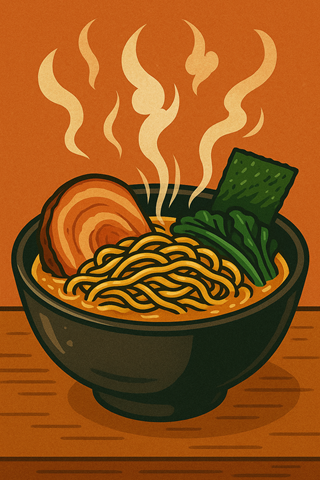
Atsu Atsu (あつあつ)
Meaning:
Steaming Hot! Piping hot! A temperature that makes you go “whoa” — but in a good way.
Best for:
Freshly served ramen bowls, hot gyoza, or soup that’s still bubbling.
Say like this:
あつあつですね!
(Atsu atsu desu ne!)
→ “It’s really hot!”
Memo:
Use this when your ramen arrives and the steam is rising up. It shows respect for freshness — and locals love that.

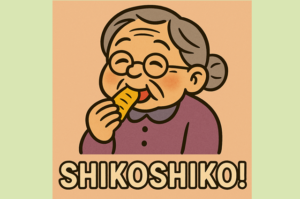
Shiko Shiko (しこしこ)

Meaning:
A firm, elastic texture — the perfect noodle bite.
Best for:
Freshly made ramen noodles with bite — not too soft, not too hard.
Say like this:
しこしこ していますね!
(Kono men, shiko shiko shitemasu ne!)
→ “These noodles are so springy!”
Memo:
Say this when slurping — it shows you know noodle texture is everything in good ramen.
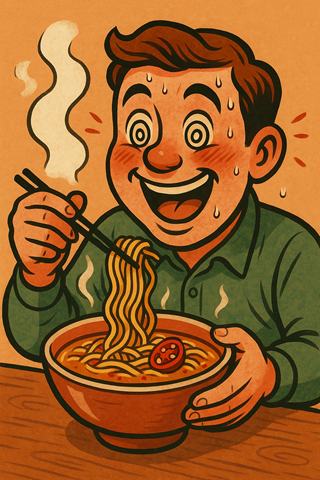
Piri! (ぴりっ)
Meaning:
A little spark of spiciness — not overpowering, just a pleasant kick.
Best for:
Spicy miso ramen, or when you add chili oil or shichimi (seven-spice mix).
Say like this:
ぴりっ としますね!
(Piri tto shimasu ne!)
→ “It’s got a nice little kick!”
Memo:
Perfect for expressing just-right spiciness. Subtle, stylish, and local.

Mochi Mochi (もちもち)

Meaning:
Soft, chewy, plump — a satisfying bounce in every bite.
Best for:
Thick noodles, rice cakes in soup, or even dumpling skins.
Say like this:
もちもちしてる〜
(Mochi mochi shiteru~)
→ “So chewy!”
Memo:
Use this when enjoying thick noodles or side dishes like mochi or dumplings. It’s a happy texture word — very cute!

Tsuru Tsuru (つるつる)
Meaning:
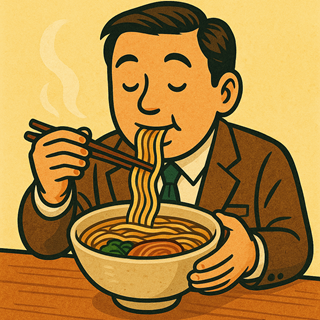
Smooth and slippery — the feeling of noodles sliding easily as you slurp.
Best for:
Thin noodles, cold noodles, or ramen that goes down easily.
Say like this:
つるつるですね!
(Tsurutsuru desu ne!)
→ “They go down so smoothly!”
Memo:
Locals use this to compliment easy-to-eat noodles. It pairs well with shio or shōyu ramen!

Summary: 5 Sound Words
Each of these sound words adds emotion and nuance to your ramen experience.
Japanese people love it when non-native speakers use these naturally — it feels warm and expressive.
Atsu Atsu! Shiko Shiko! Mochi Mochi!
Your ramen will taste even better
Next up, we’ll dive into:
- Common Ramen Flavors
- Regional Styles
Common Ramen Flavors — What’s in the Broth?
In Japan, ramen isn’t just about noodles — it’s all about the broth.
The flavor of the soup (called tare / たれ) defines the soul of each bowl.
From light and assari (あっさり) to rich and kotteri (こってり), the broth creates the first impression — and a lasting one.
Let’s dive into the 4 most common ramen broths you’ll see across Japan.
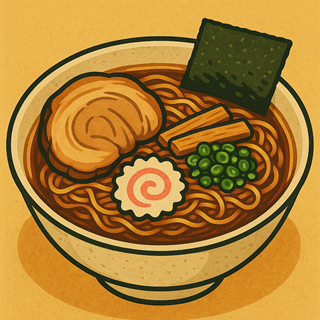
Shōyu Ramen (しょうゆラーメン) — Soy Sauce
Flavor profile:
Savory, slightly salty, and deeply fragrant from soy sauce.
Color:
Clear to brownish — not creamy.
Typical impression:
Assari (あっさり) — Light and smooth.
Popular in:
Tokyo and eastern Japan.
Best with:
Thin noodles, menma (bamboo shoots, めんま), nori (seaweed, のり), and naruto (fishcake, なると).
Shio Ramen (しおラーメン) — Salt
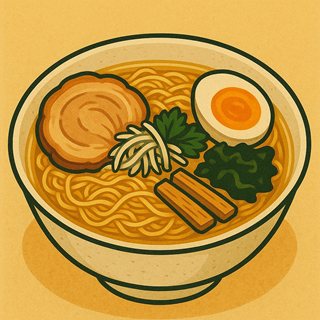
Flavor profile:
Delicate, clear, and salty in a clean way.
Color:
Pale yellow or transparent.
Typical impression:
Very assari (とてもあっさり) — Pure, no heaviness.
Popular in:
Tokyo and eastern Japan.
Best with:
Seafood-based broth, chicken, yuzu zest, light veggies.
Miso Ramen (みそラーメン) — Miso
Flavor profile:
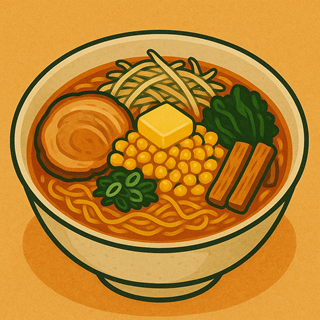
Nutty, hearty, with a little sweetness or spiciness.
Color:
Brown-orange, often rich and thick.
Typical impression:
A little kotteri (ちょいこってり) — Comforting and warm.
Popular in:
Sapporo (Hokkaido-style miso ramen)
Best with:
Corn, butter, ground pork, bean sprouts, garlic.
Tonkotsu Ramen (とんこつラーメン) — Pork Bone
Flavor profile:
Deep, rich, creamy — full of umami from long-simmered pork bones.
Color:
Milky white and opaque.
Typical impression:
A little kotteri (ちょいこってり) — Comforting and warm.
Popular in:
Fukuoka (Hakata ramen), Kyushu area.
Best with:
Hard thin noodles (barikata), pickled ginger, black garlic oil.
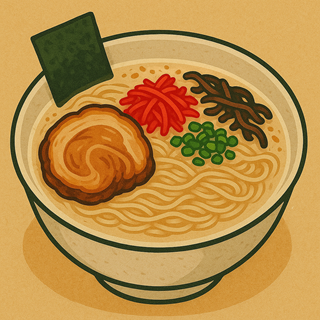
Local Ramen Styles Across Japan
Gotōchi ramen (regional ramen) is one of the most exciting parts of Japanese food culture.
Each region has its own signature flavors, noodles, toppings — and of course, textures.
From atsuatsu (piping hot) broths to shikoshiko (springy) noodles to kotteri (rich and fatty) soups, these local bowls come with their own sound-and-feel.
Let’s explore 6 famous styles — and the sound words that match them!
Yokohama Iekei Ramen
Key Traits
- Thick soy sauce + pork bone blend
- Fatty, salty, and full-bodied — very kotteri
- Thick straight noodles — mochi mochi and gatsuri
- Often eaten with a bowl of rice on the side
Sound Words:
gatsuri,mochi mochi, kotteri
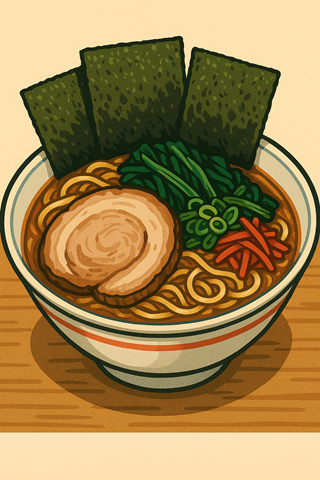
Kitakata Ramen (Fukushima)
Key Traits
- Light, assari (refreshing) soy-based broth
- Flat, wide noodles — shiko shiko and mochi mochi
- Heaps of chashu pork on top
- Very balanced and easy to eat
Sound Words:
assari, shiko shiko, mochi mochi
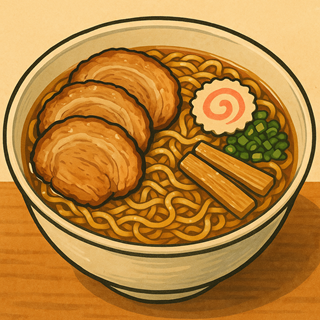
Onomichi Ramen (Hiroshima)
Key Traits
- Soy sauce broth with seafood base
- Pork back fat floating on top — but surprisingly assari
- Medium-thin flat noodles — tsuru tsuru and shiko shiko
- Rich aroma, but clean finish
Sound Words:
shiko shiko, tsuru tsuru, kotteri (but subtle)
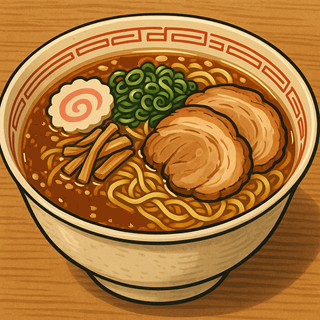
Tanrei-Style Ramen (Originally Developped in Tokyo Area)
Key Traits
- Modern “Refined” Style,
- Clear, elegant broth — often chicken or seafood
- Fine, straight noodles — shiko shiko and tsuru tsuru
- Toppings like yuzu, truffle oil, or bamboo shoots
- Elegant and modern feel — like Japanese haute cuisine
Sound Words:
assari, shiko shiko, tsuru tsuru
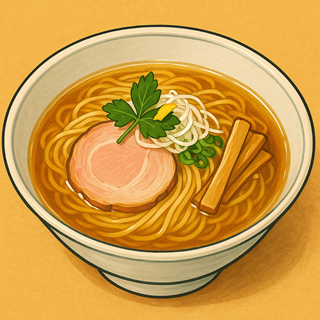
Hakata Tonkotsu Ramen (Fukuoka)
Key Traits
- Thick, cloudy, pork-based kotteri broth
- Gatsuri (hearty) flavor with bold aroma
- Thin, straight noodles — slurp them tsuru tsuru
- You can customize the noodle doneness (“barikata” = extra firm)
Sound Words:
kotteri, tsuru tsuru, gatsuri
Sapporo Miso Ramen (Hokkaido)
Key Traits
- Atsu atsu (steaming hot) miso broth — perfect for cold winters
- Topped with butter and corn
- Curly medium-thick noodles — shiko shiko and mochi mochi (chewy)
- Bold, warming flavor with depth
Sound Words:
atsu atsu, kotteri, shiko shiko, mochi mochi
Gotōchi Ramen Summary
| Style | Soup Flavor | Noodle Texture | Sound Words |
|---|---|---|---|
| Hakata | Pork bone (rich) | Thin & smooth | kotteri, tsurutsuru, gatsuri |
| Sapporo | Miso (hearty) | Curly, chewy | atsuatsu, kotteri, shikoshiko |
| Yokohama Iekei | Soy + pork (heavy) | Thick & chewy | gatsuri, mocchiri, kotteri |
| Kitakata | Soy (light) | Flat & springy | assari, shikoshiko, mocchiri |
| Onomichi | Soy + seafood | Flat & silky | shikoshiko, tsurutsuru, kotteri |
| Tanrei | Clear, refined broth | Fine & elegant | assari, tsurutsuru, shikoshiko |








Comments