

Ever felt your heart jump just once — a sharp, instant reaction?
Or experienced a full-on surprise, like a prank or sudden shock that lingers?
In Japanese, these two expressions capture those moments differently:
Doki! (どきっ)
あわせて読みたい

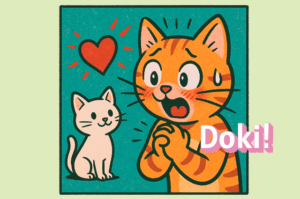
What Is “Doki!”? — The Japanese Sound of a Sudden Heart Jump
Ever had a moment that made your heart leap — a sudden confession, a surprise, or someone calling your name unexpectedly? That’s when the Japanese onomatopoe…
Dokkiri (どっきり)
あわせて読みたい

What Is “Dokkiri”? The Japanese Word for Sudden Shock or Surprise
Ever experienced a moment where your heart skipped a beat from pure shock? Or saw someone completely fooled by a prank? That’s when the Japanese word “Dokkir…

Table of Contents
Differences Between Doki (どきっ) and Dokkiri (どっきり)
スクロールできます
| Doki! | Dokkiri | |
|---|---|---|
| Meaning | A single, sharp heartbeat | A whole surprise event |
| Time span | Instant / momentary | Short scene or experience |
| Intensity | Quick emotional spike | Strong, often dramatic shock |
| Sound | Pure sound / reaction | No real sound; conceptual |
| Type | Onomatopoeia | Almost onomatopoeia |
| Verb Compatibility | Usually stands alone or with mimetic verb | Becomes a noun/verb — “bikkuri suru” |
| Tone | Heart jumps once | Heart jumps + confusion + reaction |
Examples in Daily Life
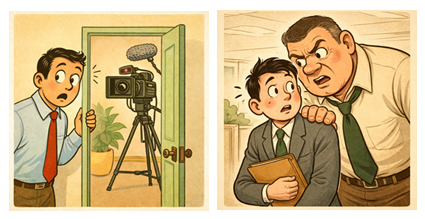
Example 1: Sudden moment (Doki!)
He heard someone whisper his name from behind —
doki!
Example 2: Surprise setup (Dokkiri)
A hidden camera was waiting behind the door —
dokkiri!
Try Using Them!
A sudden noise or realization? → Say doki!
A prank, jump scare, or shocking situation? → Say dokkiri!
Explore More: Comparison Series










Comments