
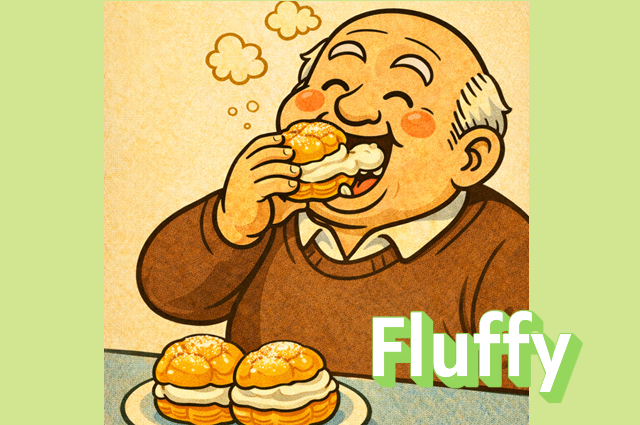
In English-language anime and manga, soft and dreamy things are often described with words like “Fluffy”, “Light and Airy”, or even “Floaty.”
These are the moments where something feels soft to the touch —
like a freshly baked pancake, a cloud drifting by, or a gentle, carefree mood that makes you feel like you’re floating.
But how are these feelings captured in the original Japanese?
Let’s step into the world of anime, cafés, and cozy moments to discover how Japanese onomatopoeia brings this softness to life.
What Is a “Fluffy” Moment?
It’s that gentle texture or mood that feels like a warm sigh.
Not too heavy. Not too serious. Just soft, floaty, and kind.
In anime and manga, you’ll find it when:
- a bunny hops onto a cushion
- a character falls asleep on a puffy pillow
- steam rises from a soufflé pancake
- someone spaces out in a daze with sparkles in their eyes
In English, these moments are often described as:
- Fluffy – Soft and light in texture
- Airy – Light and floaty in feel
- Puffy – Inflated or cloud-like
- Dreamy / Floaty – Gentle and light in mood
So how does Japanese give this soft, fluffy feeling a sound?

How Is This Feeling Expressed in Japanese?
In Japanese, physical textures and emotional moods often come with a matching sound —
and for all things fluffy and gentle, the word is:
“Fuwa Fuwa” (ふわふわ)
It’s the sound of fluff, softness, and airiness —
used to describe both touch and feeling, from puffy pillows to daydreamy moods.
Let’s hear how it sounds.


What Is Japanese Onomatopoeia “Fuwa Fuwa” (ふわふわ) ?
“Fuwa Fuwa” is a Japanese onomatopoeia that captures the feeling of something soft, fluffy, light, and airy — both in texture and in mood.
It brings to mind pillows, clouds, cotton candy, and even people in a whimsical, absent-minded mood.
Used in:
- Soft textures: pillows, pancakes, clouds, hair
- Floating or drifting objects
- Lighthearted or dreamy emotions
- Cute, gentle characters with no hard edges

Pronunciation
foo-wah foo-wah
Categories
Texture / Emotion / Motion
Examples in Daily Life
To learn about how it appears in manga or daily conversation, dive into the following page:
Examples










Comments