
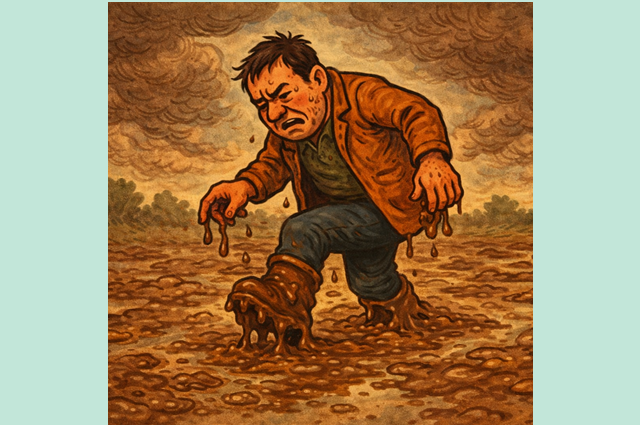
Ever touched honey with bare hands and instantly regretted it?
Or finished a soft-serve ice cream only to realize your mouth is a sticky disaster?
That’s when the Japanese onomatopoeia “Beto Beto” (べとべと) comes in —
a sound-and-feel word for unpleasant stickiness that clings to you.
Before we dive in, hear what it sounds like!

What is “Beto Beto” (べとべと)?
“Beto Beto” is a Japanese onomatopoeia that describes a sticky, gooey, unpleasant texture caused by thick liquids or residue.
It’s commonly used when:
- Honey, syrup, oil, or sauce sticks to your skin
- Food residue clings to your hands or face
- Something feels dirty, uncomfortable, and hard to get rid of
Unlike neutral or pleasant textures, beto beto almost always carries a negative nuance.
Pronunciation
beh-toh beh-toh
(Say it with slight disgust — as if your fingers are already stuck together.)
Categories
Texture
What Does “Beto Beto” Look Like?
It looks like hands coated in honey.
Like syrup refusing to drip — only sticking.
Like shiny, messy residue clinging to skin.

How Do You Say It?
Say it with discomfort:
Beto… beto…
As if you want to wash your hands immediately.
Examples in Daily Life
Example 1: Soaking Beto Beto
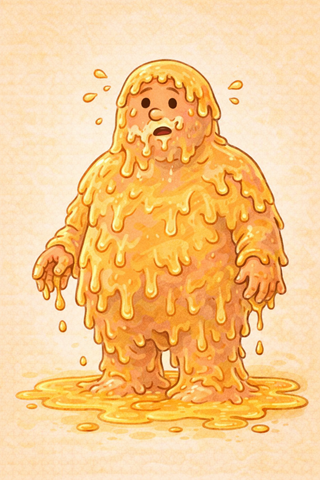
He accidentally knocked over a giant jar of honey…
Now he’s not just sticky — he’s soaking beto beto.
Example 2: Ice cream disaster
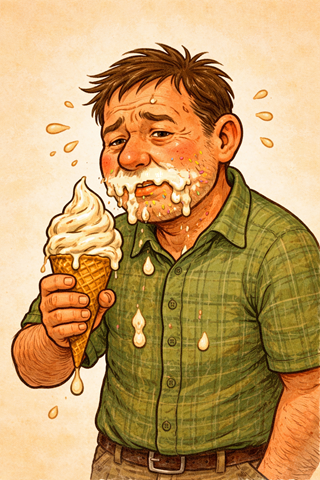
The old man finished his soft-serve ice cream,
but his mouth was beto beto with melted cream.
Cultural Note
In English, you might say:
- “Sticky”
- “Covered in syrup”
- “A gooey mess”
But “beto beto” goes further —
it conveys physical discomfort, messiness, and the urge to clean up right now.
It’s a very sensory word, often used in casual speech to complain or joke about unpleasant textures.
Try Using It!
Hands covered in honey? → Beto beto!
Mouth sticky after sweets? → Beto beto…
Touching something gross and sticky? → Definitely beto beto.





Comments