
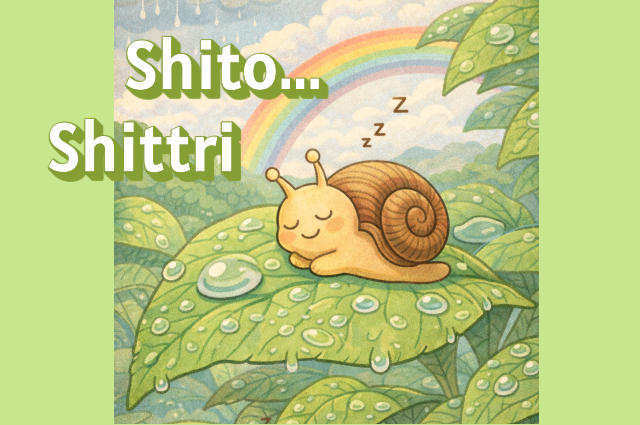
Ever touched something just slightly damp — like a sleeve or a doorknob?
Or enjoyed a soft, moist cake or a quiet, calm mood?
Japanese has subtle ways to describe both sensations:
Shito (しとっ)
あわせて読みたい


What Is “Shito”? The Japanese Sound of Gentle Dampness
Ever walked into a room and felt the air just slightly humid — not soaking wet, but noticeably moist?Or touched a fabric that was cool and quietly damp? That…
Shittori (しっとり)
あわせて読みたい

What Is “Shittori”? The Japanese Word for Moist, Calm, and Graceful — Almost Onomatopoeia
Have you ever touched a cake that’s perfectly moist? Or felt the quiet calm of a gentle, rainy afternoon? In Japanese, that soft, rich, peaceful texture and …

Table of Contents
Differences Between “Shito” (しとっ) and “Shittori” (しっとり)
スクロールできます
| Shito (しとっ) | Shittori (しっとり) | |
|---|---|---|
| Type | Onomatopoeia | Almost onomatopoeia |
| Meaning | Lightly damp — pinpoint sensation | Gently moist — atmospheric or textural |
| Nuance | One-time or partial touch | Overall texture / ambiance |
| Sound | Implied tiny wet sound | No sound; conceptual softness |
| Usage | “The sleeve felt wet — shito.” | “This cake is moist — shittori shiteiru.” |
| Verb Compatibility | Usually mimetic | “shittori suru” as a state verb |
| Tone | Physical / specific | Elegant / poetic |
Examples in Daily Life
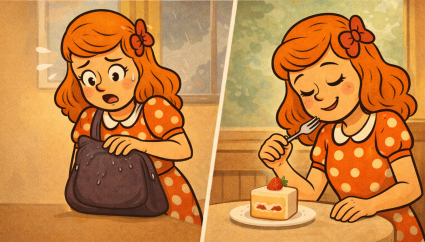
Example 1: Wet sleeve moment (Shito)
She touched her bag and felt it —
shito!
Example 2: Moist and elegant (Shittori)
The cake was soft and moist —
shittori…
Try Using Them!
Feeling a spot of moisture? → Say shito!
Describing an elegant, quiet texture or vibe? → Say shittori…
Explore More: Comparison Series









Comments