
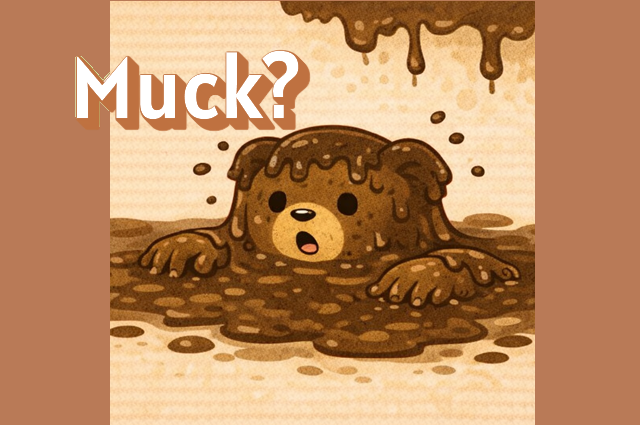
Imagine a big, gooey, purple blob Pokémon made entirely of sludge and toxins.
In English, it’s called Muk—a name that instantly feels messy, gross, and heavy.
That’s no coincidence.
Just like “Meowth” sounds like a cat, Muk sounds like something slimy and unpleasant.
It’s a name built on feeling.
But in Japanese, this Pokémon has a very different name…

What Is It Called in Japanese?
In Japan, Muk is known as Betbeton(ベトベトン).
Where does that name come from?
From the Japanese onomatopoeia “beto beto”,
which describes something wet, sticky, gooey, and kind of gross—like spilled syrup or slimy hands.
- “beto beto” = sticky, icky texture
- “-n” ending = makes it feel heavy or massive, like a final plop

So Betbeton is a sound-born name, created entirely from how the Pokémon would feel if you touched it.
You don’t have to see it—you can almost feel it through the name.

How About the English Name?
The English name, Muk, also comes from texture.
It’s based on the English word “muck”, which means:
- dirt, filth, or sticky, messy sludge
- something unpleasant or disgusting
Like Betbeton, “Muk” is short, thick, and unclean.
It’s not as musical as “beto beto,” but it still sounds like what it means.

Comparing the Two
| Language | Name | Based On | Meaning/Feeling |
|---|---|---|---|
| Japanese | Betbeton | “beto beto” (sticky) | Sound-born name based on touch |
| English | Muk | “muck” (filth/sludge) | Texture-based name from real word |
Both names come from how the Pokémon feels,
but each one is shaped by its language’s own way of expressing stickiness.
Final Thoughts
Some names sparkle. Some names shout.
And some, like Betbeton and Muk, just squish and slop their way into your brain.
They remind us that names don’t always come from what a character does,
but from how they feel—through sound, texture, and culture.
And sometimes, that’s all you need to make a name stick.












Comments