
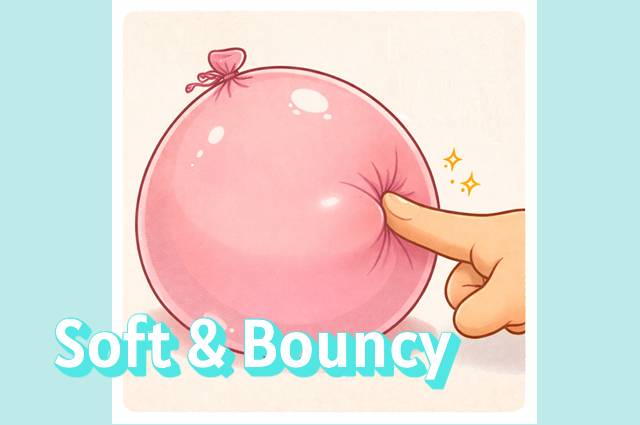
In English, we describe certain textures as:
- Squishy
- Soft and bouncy
- Gently elastic
- Satisfyingly squeezable
These are textures you want to press.
Poke.
Gently squeeze.
But how does Japanese capture that soft resistance — the feeling of something that pushes back just a little… and then returns to shape?
Let’s step into the world of Japanese onomatopoeia and discover the sound of squish.
What Is a “Squishy” Moment?
It’s the tactile pleasure of:
- Pressing something soft
- Feeling gentle resistance
- Watching it bounce back
It’s not floppy.
It’s not sticky.
It’s not firm.
It’s soft — but resilient.
In English, we might say:
- Squishy – Soft and compressible
- Bouncy – Elastic and springy
- Squeezable – Pleasant to press
But Japanese has a sound that feels just like the motion itself.

How Is This Feeling Expressed in Japanese?
Japanese often uses repeating syllables to describe tactile sensations.
The standout word for soft, squishy elasticity is:
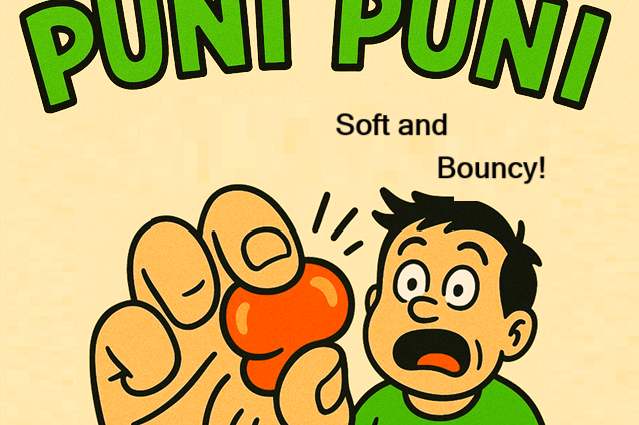
“Puni Puni” (ぷにぷに)
It captures the exact feeling of pressing something soft that gently springs back.
Let’s feel how it sounds.
What Is Japanese Onomatopoeia “Puni Puni (ぷにぷに)” ?
“Puni Puni” describes:
Texture
- Baby cheeks
- Soft mochi-like treats
- Jelly-like toys
- Plush, squeezable surfaces
It expresses:
- Softness
- Elasticity
- Gentle resistance
- Tactile pleasure
When you press it, it yields —
but it doesn’t collapse.
That tiny bounce back?
That’s ぷにぷに.
Pronunciation
poo-nee poo-nee
Category
Texture
Examples in Daily Life
To learn about how it appears in manga or daily conversation, dive into the following page:
Examples











Comments