
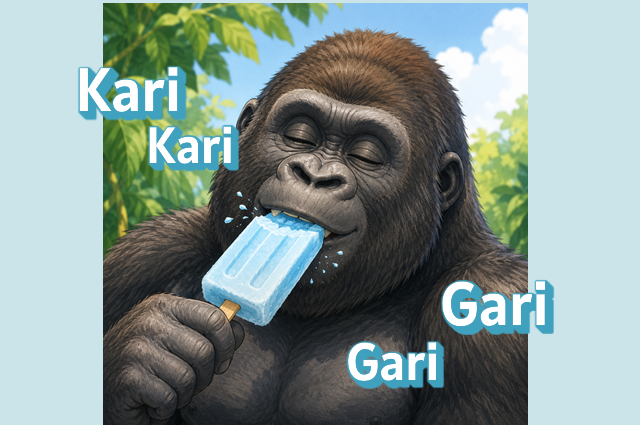
Have you ever heard someone lightly crunching on a snack?
Or listened to a rough scraping sound that feels much harsher and stronger?
In Japanese, these two expressions both involve hard, dry sounds — but the intensity and feeling are very different:
Kari Kari (かりかり)
あわせて読みたい

What Is “Kari Kari”? The Japanese Sound of Light, Crisp Scratching and Crunching
Have you ever bitten into a crispy snack? Or heard the sound of something lightly scratching on a surface? That light, dry, crisp sound in Japanese is expres…
Gari Gari (がりがり)
あわせて読みたい
What Is “Gari Gari”? The Japanese Sound of Crunching, Scratching, or Being Skin-and-Bones
Ever bitten into a frozen popsicle and heard that dry, sharp crunch? Or scratched something rough with your nails? Or seen someone so thin, you could practic…
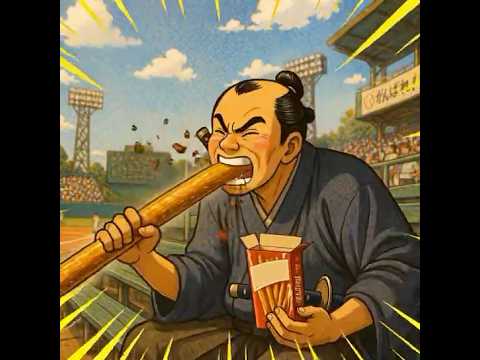
Both involve crunchy or scraping sensations, but one feels light and crisp, while the other feels rough, hard, and intense.
Table of Contents
Differences Between “Kari Kari” and “Gari Gari”

| Expression | Meaning | Nuance |
|---|---|---|
| Kari Kari (かりかり) | Light crisp crunching or scratching | Dry, neat, rhythmic, pleasant |
| Gari Gari (がりがり) | Rough scraping, grinding, or hard crunching | Harsh, intense, strong, aggressive |
In short:
- Kari kari → light, crisp crunching
- Gari gari → rough, forceful scraping or crunching
Examples in Daily Life
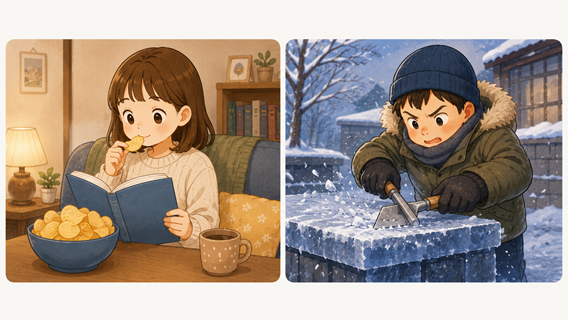
Example 1: Eating a crispy snack (Kari Kari)
She quietly ate potato chips while reading —
kari kari…
Example 2: Scraping ice (Gari Gari)
He scraped the frozen ice forcefully with a tool —
gari gari!
Try Using Them!
Light crispy snacks or soft scratching sounds?
→ Say kari kari
Hard scraping, grinding, or rough crunching?
→ Say gari gari
Both involve dry, hard sounds —
but the force and roughness are completely different!
More Texture-based Onomatopoeia:

More Sound-based Onomatopoeia:


Comments