
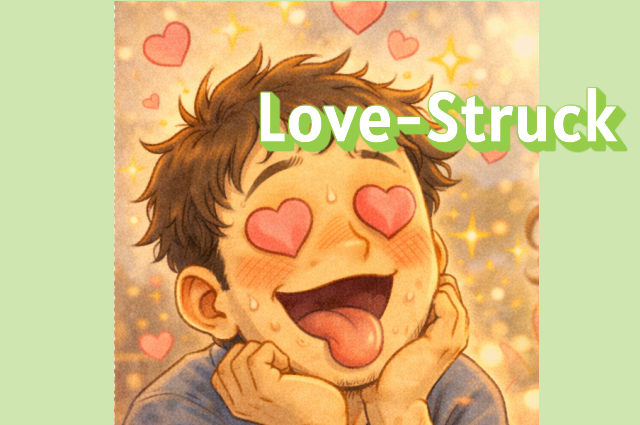
In English, we describe someone who is overwhelmed by affection as:
- Love-struck
- Smitten
- Head over heels
- Dazed with love
It’s the state where someone isn’t thinking clearly anymore —
because their heart has completely taken over.
But how does Japanese express that soft, silly, melted-by-love state with a repeating sound?
Let’s step into the world of Japanese onomatopoeia and discover the sound of affectionate melting.
What Is a “Love-Struck” Moment?
It’s when:
- Someone grins foolishly at the person they like
- A character melts at a cute gesture
- Someone becomes distracted because they’re infatuated
- A normally serious person turns soft and sweet
In English, we might say:
- Love-struck – Deeply affected by love
- Smitten – Completely charmed
- Dazed – Mentally unfocused
- Melting – Overwhelmed with affection
But Japanese gives this emotional softness a playful rhythm.

How Is This Feeling Expressed in Japanese?
Japanese often uses repeating sounds to express a lingering state.
The standout word for acting overly affectionate or smitten is:
“Dere Dere” (でれでれ)
It captures the feeling of someone melting into sweet, silly affection.
Let’s feel how it sounds.
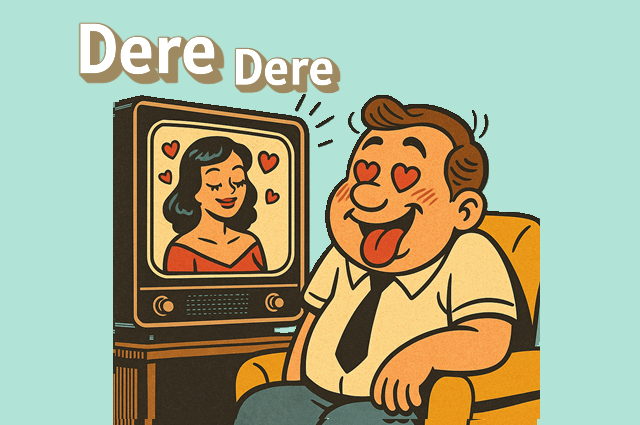
What Is Japanese Onomatopoeia “Dere Dere (でれでれ)” ?
“Dere Dere” describes:
Affectionate Softness
- Grinning foolishly at someone you love
- Acting overly sweet
- Melting emotionally
Absentminded from Infatuation
- Not acting sharp
- Being distracted
- Looking dazed and overly relaxed
It’s playful.
It’s soft.
Sometimes it even carries a nuance of being too unserious.
Unlike dramatic passion,
“Dere Dere” feels relaxed and openly affectionate.
Pronunciation
koo-rah koo-rah
(Say it softly and wavily — like your head is swaying inside.)
Categories
Emotion / Condition
Examples in Daily Life
To learn about how it appears in manga or daily conversation, dive into the following page:
Examples








Comments