
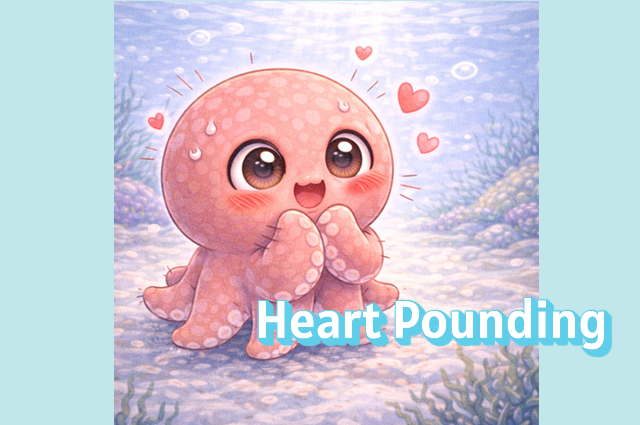
In English, we describe strong heartbeats as:
- My heart is pounding
- Thump-thump
- My heart is racing
- Butterflies in my stomach
It’s that moment when your chest feels loud.
When you’re nervous, excited, scared, or in love.
But how does Japanese capture the sound and sensation of a fast-beating heart in one simple rhythm?
Let’s step into the world of Japanese onomatopoeia and discover the sound of heartbeat.
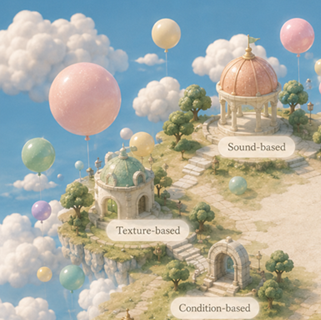
What Is a “Heart Pounding” Moment?
It’s when:
- You’re about to confess your feelings
- You step onto a stage
- You watch something thrilling
- You’re suddenly startled
In English, we might say:
- Heart pounding – Strong, fast heartbeat
- Heart racing – Rapid pulse from emotion
- Thump-thump – Imitating heartbeat sounds
- Butterflies – Nervous excitement
But Japanese gives that heartbeat a clear, rhythmic voice.
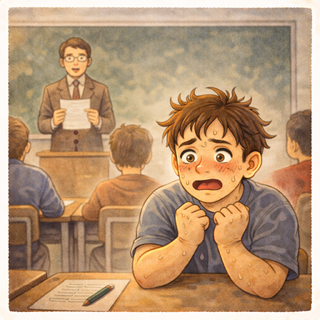
How Is This Feeling Expressed in Japanese?
Japanese often uses repeating sounds to imitate physical sensations.
The standout word for a fast, emotional heartbeat is:
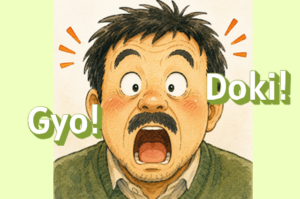
“Doki Doki” (どきどき)
It represents both:
- The literal sound of a beating heart
- The emotional state behind it
Let’s feel how it sounds.

What Is Japanese Onomatopoeia “Doki Doki (どきどき)” ?

“Doki Doki” describes:
Excitement
- Anticipation before something big
- Thrill from a fun or risky situation
Nervousness
- Before speaking in public
- Waiting for results
- Meeting someone special
Romantic Feelings
- Seeing your crush
- Holding hands for the first time
- Unexpected eye contact
It’s not calm.
It’s not steady.
It’s alive.
Quick.
Emotional.
Pronunciation
doh-kee doh-kee
Categories
Emotion / Sound
Examples in Daily Life
To learn about how it appears in manga or daily conversation, dive into the following page:
Examples










Comments