

In English, we describe that intense body reaction as:
- A chill ran down my spine
- Shivers
- I got goosebumps
- That gave me thrills
Sometimes it’s cold.
Sometimes it’s fear.
Sometimes it’s excitement so strong it tingles.
But how does Japanese capture that repeated wave of shivers with a rhythmic sound?
Let’s step into the world of Japanese onomatopoeia and discover the sound of a thrill.
What Is a “Chill or Thrill” Moment?
It’s when:
- A scary scene makes you shiver
- Cold air hits your skin
- Something exciting sends a rush through your body
- You feel nervous anticipation
In English, we might say:
- Shiver – A brief shaking sensation
- Chills – Sudden cold or emotional reaction
- Thrilled – Excited in a powerful way
- Spine-tingling – Intensely exciting or scary
But Japanese gives this physical reaction its own rhythm.

How Is This Feeling Expressed in Japanese?
Japanese often uses repeating syllables to show repeated sensations moving through the body.
The standout word for a wave-like shiver or thrill is:
“Zoku Zoku” (ぞくぞく)
It represents that tingling sensation traveling through you — again and again.
Let’s feel how it sounds.
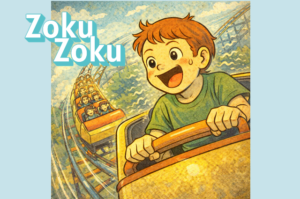
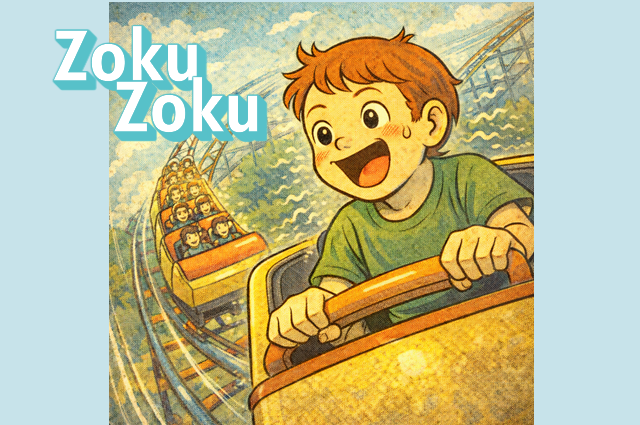
What Is Japanese Onomatopoeia “ぞくぞく (Zoku Zoku)” ?
“Zoku Zoku” describes:
Physical Shiver
- Feeling cold
- Fear creeping through your body
- Repeated chills
Excited or Nervous Thrill
- Anticipation before something intense
- A powerful emotional reaction
- A spine-tingling moment
Unlike “Zowa Zowa,” which feels more eerie and uncomfortable,
“Zoku Zoku” can be both unpleasant and exciting.
It can mean:
Cold.
Fear.
Or thrilling excitement.
It’s stronger.
More active.
More repeated.
Pronunciation
zo-ku zo-ku
(Say it with short, sharp rhythm — like a quick pulse.)
Categories
Emotion / Condition
Examples in Daily Life
To learn about how it appears in manga or daily conversation, dive into the following page:
Examples









Comments