
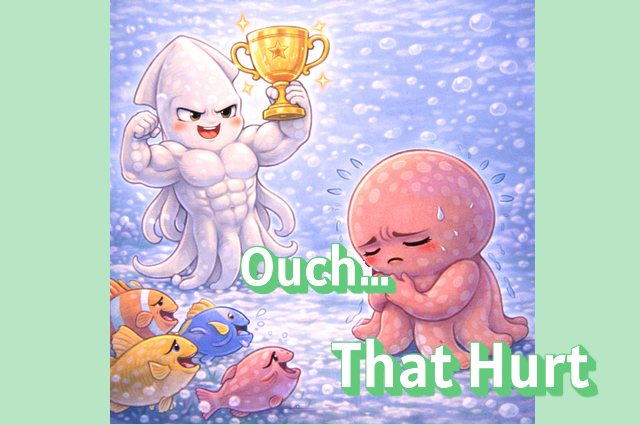
In English, we describe sudden emotional or physical pain as:
- Stab
- Ouch
- That hurt
- Right in the heart
Sometimes it’s literal — a knife piercing something.
Sometimes it’s emotional — a comment that cuts deep.
But how does Japanese capture that single, sharp moment of impact with one explosive sound?
Let’s step into the world of Japanese onomatopoeia and discover the sound of a stab.

What Is a “Sharp Impact” Moment?
It’s when:
- Something pierces suddenly
- A painful truth hits you
- Someone says something brutally honest
- You feel embarrassed in front of others
In English, we might say:
- Stab – A sharp piercing motion
- Ouch – Reaction to sudden pain
- That hit hard – Emotional impact
- Cut deep – Emotionally painful
But Japanese turns that instant shock into a single, powerful sound.
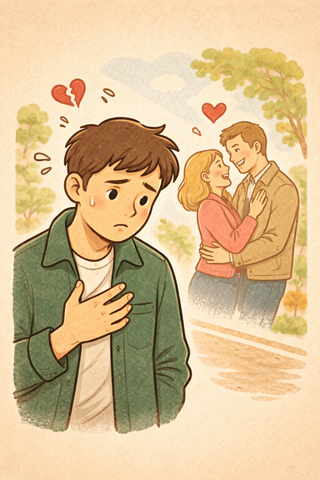
How Is This Feeling Expressed in Japanese?
Japanese often uses short, sharp syllables to represent sudden impact.
The standout word for a stabbing shock is:
“Gusa!” (ぐさっ!)
It captures the precise moment something pierces — physically or emotionally.
Let’s feel how it sounds.
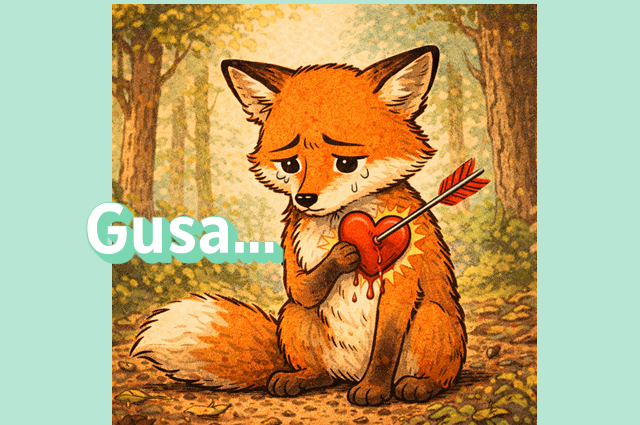
What Is Japanese Onomatopoeia “Gusa! (ぐさっ!)” ?
“Gusa!” describes:
Physical Stabbing
- A knife piercing
- Something sharp entering suddenly
- A dramatic manga attack scene
Emotional Stab
- A comment that hurts
- Brutal honesty
- A realization that hits painfully
It’s sudden.
It’s sharp.
It lands — and then silence.
Unlike lingering irritation like “ira ira,”
“gusa!” is instant.
Impact.
Shock.
Stillness after.
Pronunciation
goo-sah
(Short and heavy — like a sudden stab or painful truth hitting you)
Categories
Sound / Emotion
Examples in Daily Life
To learn about how it appears in manga or daily conversation, dive into the following page:
Examples







Comments