
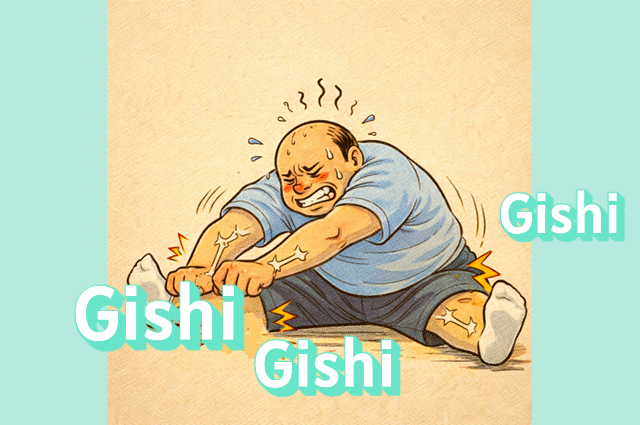
A chair under strain.
An old door frame.
A wooden floor in the middle of the night.
In Japanese, that uncomfortable creak is called:
Gishi Gishi(ぎしぎし)
Let’s listen to how it sounds!

What is “Gishi Gishi” (ぎしぎし)?
“Gishi Gishi” describes:
- Creaking or groaning sounds from objects under tension
- The sound of wood, metal, or joints straining or moving
- Sometimes used metaphorically — for awkward social tension or joint pain
It’s a sharp, stiff sound — often associated with rigid or uncomfortable things.

Pronunciation
gee-shee gee-shee
(With pressure and tension — like something resisting movement.)
Categories
Sound / Condition
What Does “Gishi Gishi” Look Like?
It looks like a chair slowly shifting under someone’s weight.
Like metal pipes groaning in winter.
Like a door that hasn’t been oiled in years.

How Do You Say It?
Say it with tension:
Gishi… gishi…
as if you’re afraid something might break.
Examples in Daily Life
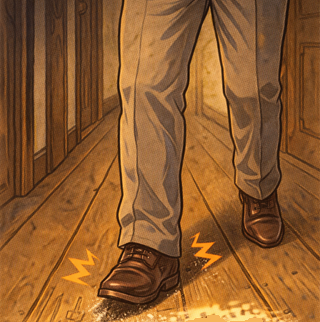
Example 1: Old floorboards
He stepped across the hallway,
and the wooden floor cried —
gishi gishi…
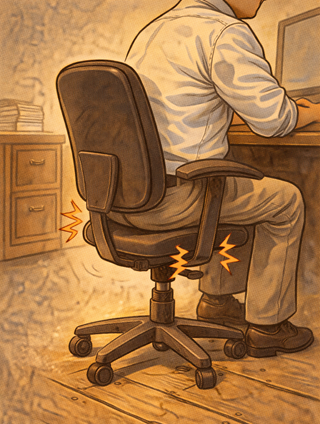
Example 2: Office chair creaking
The chair beneath him let out a small warning:
gishi gishi…
Cultural Note
In English, we’d say:
- “Creak… creak…”
- “Groaning metal”
- “Creaking joints”
But in Japanese, gishi gishi isn’t just sound — it also gives a sense of stiffness or discomfort.
Watch & Feel the “Gishi Gishi” World!
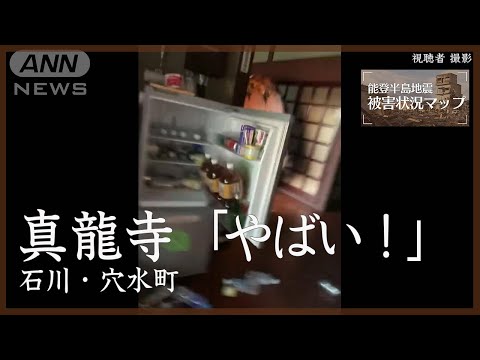
Feel the “Gishi Gishi” — Earhquake
Try Using It!
Hear your floor creak?
Sit in a noisy old chair?
Try saying:
Gishi gishi〜












Comments