
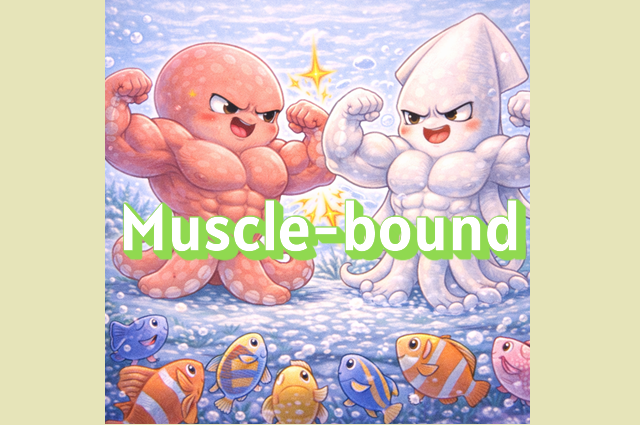
In English, we describe a muscular body as:
- Buff
- Muscle-bound
- Ripped
- Built
It’s the look of tight, defined muscles — flexed and ready.
Sometimes it’s impressive.
Sometimes it’s exaggerated.
Sometimes… it’s a little funny.
But how does Japanese express that visibly muscular, flexed strength with a repeating rhythm?
Let’s step into the world of Japanese onomatopoeia and discover the sound of muscles.
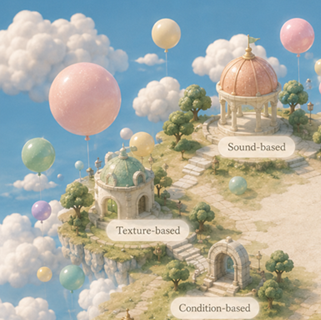
What Is a “Buff / Muscular” Moment?
It’s when:
- Someone flexes dramatically
- A bodybuilder shows off their biceps
- An anime character suddenly reveals a huge physique
- An animal looks surprisingly muscular
In English, we might say:
- Buff – Physically muscular
- Ripped – Extremely defined muscles
- Built – Solid and strong
- Flexing – Tightening muscles to show them
But Japanese gives that muscular tension its own rhythm.

How Is This Feeling Expressed in Japanese?
Japanese often uses repeating sounds to describe a physical state or appearance.
The standout word for a muscular, flexed body is:
“Muki Muki” (むきむき)
It represents tight, developed muscles under visible tension.
Let’s feel how it sounds.
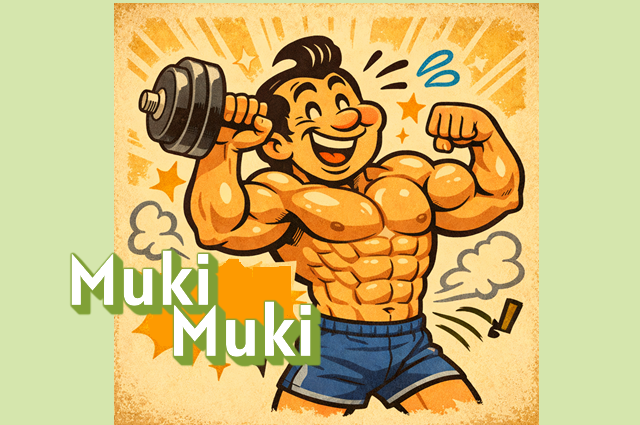
What Is Japanese Onomatopoeia “Muki Muki (むきむき)” ?
“Muki Muki” describes:
Well-Developed Muscles
- Big biceps
- Defined abs
- Broad, muscular shoulders
Flexed Tension
- Muscles tightened
- Showing off strength
- Striking a macho pose
It’s often used for:
- Bodybuilders
- Strong anime characters
- Comedic macho types
- Even unexpectedly muscular animals
Sometimes it’s serious.
Sometimes it’s playful.
Unlike simple words for “strong,”
“muki muki” emphasizes the visible bulk and flex.

Pronunciation
moo-kee moo-kee
(With firm tone — sound it out like you’re flexing!)
Categories
Visual / Condition
Example in Daily Life
To learn about how it appears in manga or daily conversation, dive into the following page:
Example









Comments