
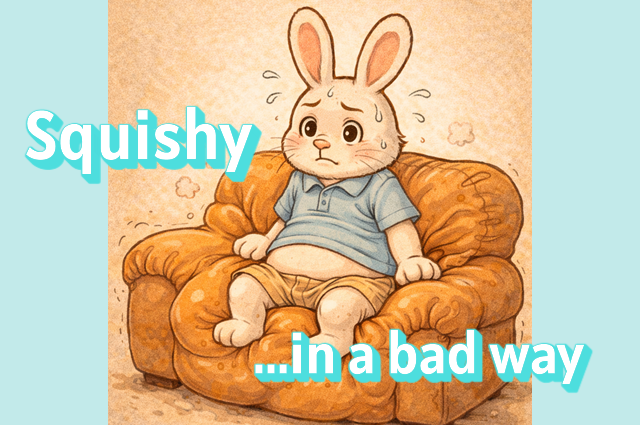
Not all softness is pleasant.
Sometimes something feels loose, wobbly, or lacking structure.
It moves when you wish it wouldn’t.
It sags instead of bouncing back.
English gives us words like “flabby,” “saggy,” or “squishy.”
But what if there were a word that captured that slightly uncomfortable wobble in one sound?

What Is a “Flabby” Moment?

It’s when something feels soft —
but not in a good way.
In anime and manga, this happens when:
- a character grabs their arm and it jiggles uncomfortably
- someone complains about lack of muscle tone
- food turns overly soft and mushy
- a rubbery object wobbles without bounce
In English, these moments are described as:
- Flabby – Soft and lacking firmness
- Saggy – Drooping or hanging loosely
- Squishy (in a bad way) – Too soft without structure
- Bloated – Swollen or puffed up uncomfortably
But none of these fully express the texture, emotion, and rhythm of the moment.
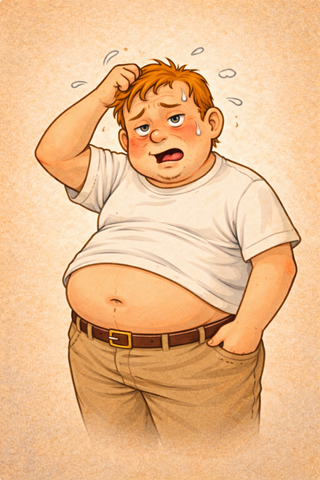
If You Had to Say It in One Word… Try “Buyo Buyo”
In Japanese, there’s an onomatopoeic expression that captures this uncomfortable softness perfectly:
buyo buyo (ぶよぶよ) — the feeling of something soft, loose, and lacking firmness.
It’s one of the many magical sound-based expressions in Japanese known as onomatopoeia,
where the sound mirrors the texture itself.
Unlike “mochi mochi,” which suggests pleasant bounce and chewiness,
“buyo buyo” carries a slightly negative nuance — softness without resilience.
With “buyo buyo,” you can describe flabby arms, sagging surfaces, or overly mushy textures.
It’s vivid, tactile — and a little unforgiving.
Wouldn’t it be fun to borrow this expression in English too?
Next time you whisper something, try saying this word —
it’s fun and feels just right.
What Does “Buyo Buyo” Really Mean?
Want to learn more about its pronunciation, nuance, and how it appears in manga, comedy scenes, and everyday conversation?
Dive into the following page ↓↓↓









Comments