
Have you ever pulled something stretchy and let it snap back?
Or seen something bounce with elasticity?
That quick, springy motion in Japanese is expressed as:
“Biyon” (びよん)
Let’s hear how it sounds!

What is “Biyon” (びよん)?
“Biyon” describes:
- A quick elastic stretch or bounce
- Something that extends and snaps back
- A motion that feels springy and flexible
It’s often used for:
- Rubber-like materials
- Elastic movement
- Cartoon-like stretching actions

Pronunciation
bee-yon
(Say it with a slight bounce — like something snapping back.)
Category
Motion
What Does “Biyon” Look Like?
It looks like a rubber band being pulled and released.
Like something stretching briefly and bouncing back.
Like a quick, elastic motion.

How Do You Say It?
Say it with a quick, springy feel:
Biyon!
Like something stretching —
and instantly returning.
Example in Daily Life
Elastic stretch
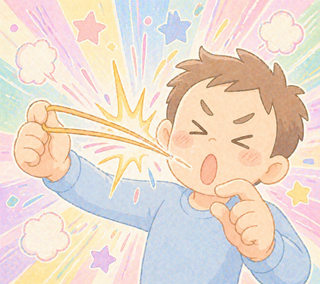
He pulled the rubber band —
and it snapped back —
biyon!
Cultural Note
In English, you might say:
- “Boing!”
- “Stretch and snap”
But “biyon” has a specific nuance:
Quick stretch
Immediate return
Light, elastic movement
It often feels a bit playful or cartoon-like.
About “Biyooon” (びよーん)
When the stretch becomes longer and more exaggerated,
Japanese stretches the sound:
Biyooon (びよーん)
This version suggests:
- A longer stretch
- More dramatic extension
- A more cartoonish or exaggerated motion
So:
びよん = quick, small bounce
びよーん = long, exaggerated stretch
Watch & Feel the “Biyon” World!
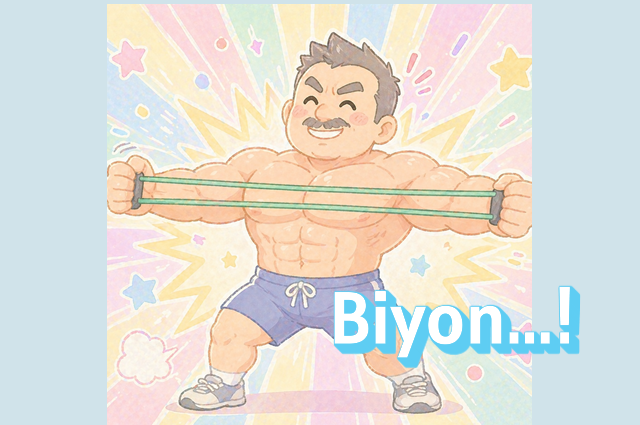
Feel the “Biyon” — A Resistance Band

Try Using It!
When something stretches and snaps back…
When you see elastic movement…
When something feels springy…
Say it playfully:
Biyon!








Comments