
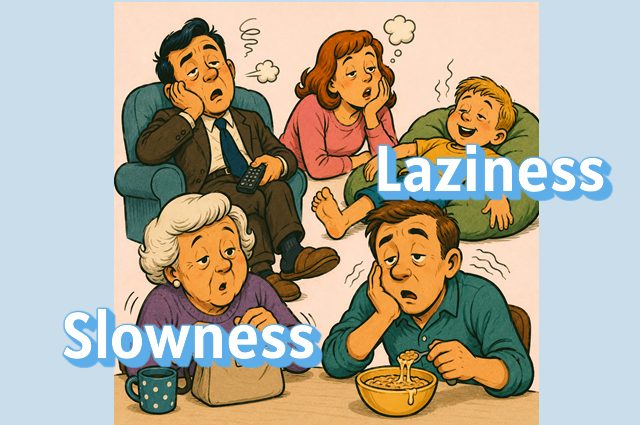
Slowness doesn’t always look the same.
Sometimes it’s physical weakness.
Sometimes it’s hesitation.
And sometimes, it’s pure laziness.
In Japanese, these subtle differences are expressed through a variety of sound words — each capturing a unique kind of slow or sluggish behavior.
Instead of ranking them by intensity, let’s explore how each one feels.

How Slowness Sounds in Japanese
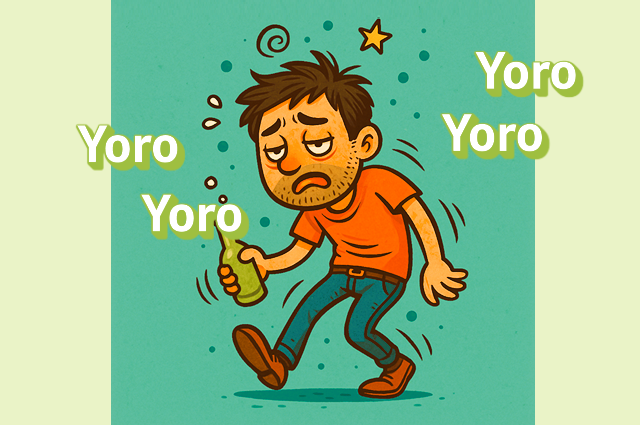
Yoro Yoro (よろよろ)
Unsteady, shaky movement.
Often used when someone is weak, tired, or about to collapse.
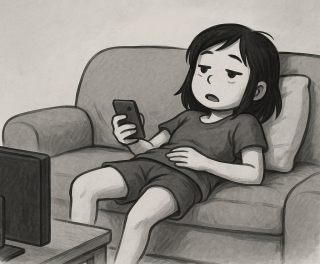
Dara Dara (だらだら)
Lazy, unmotivated behavior.
Doing things without energy or urgency.
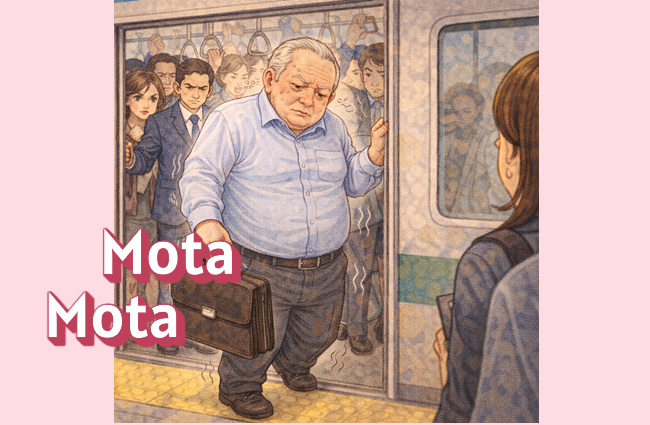
Mota Mota (もたもた)
Slow and clumsy movement.
Taking too long, often in an inefficient way.
Noro Noro (のろのろ)
Extremely slow movement.
Dragging along at a frustratingly slow pace.

Guzu Guzu (ぐずぐず)
Delaying or hesitating.
Not taking action, even when it’s needed.

Funya Funya (ふにゃふにゃ)
Soft, limp, and lacking strength.
Can describe both physical weakness and a lack of firmness.

Try Using It!
Next time something feels slow —
pause for a moment and ask:
👉 What kind of “slow” is this?
Is it weak?
Lazy?
Hesitant?
Or just inefficient?
Try expressing it with a Japanese sound word —
you may find it describes the situation more precisely than expected.










Comments