

Have you ever worn a sweater that was far too big for you?
Or sunk into a cushion so soft and fluffy that you never wanted to get up?
In Japanese, these two expressions may sound similar:
Buka Buka (ぶかぶか)
あわせて読みたい


What Is “Buka Buka”? The Japanese Sound of Something Too Loose or Too Big
Have you ever worn clothes that were far too large for you? Or seen oversized sleeves hanging loosely around someone’s hands? That loose, oversized feeling i…
Fuka Fuka (ふかふか)
あわせて読みたい

What Is “Fuka Fuka”? The Japanese Sound of Soft, Fluffy Comfort
Have you ever sunk into a soft bed? Or touched a cushion that feels light and airy? That warm, fluffy softness in Japanese is expressed as: “Fuka Fuka” (ふか…
But one describes something too large, while the other describes something wonderfully soft.
Table of Contents
Differences Between “Buka Buka” and “Fuka Fuka”

| Expression | Meaning | Nuance |
|---|---|---|
| Buka Buka (ぶかぶか) | Too large or loose-fitting | Extra space, oversized, hanging loosely |
| Fuka Fuka (ふかふか) | Soft, fluffy, cushioned | Comfortable, warm, pleasant to touch |
In short:
- Buka buka → too big and loose
- Fuka fuka → soft and fluffy
Examples in Daily Life
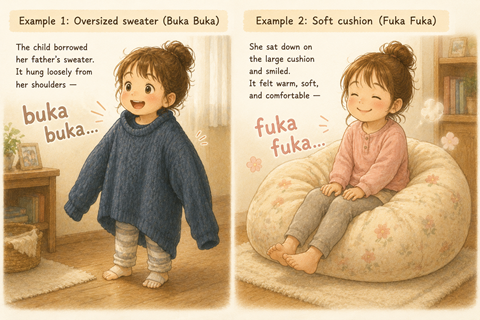
Example 1: Oversized sweater (Buka Buka)
The child borrowed her father’s sweater.
It hung loosely from her shoulders —
buka buka…
Example 2: Soft cushion (Fuka Fuka)
She sat down on the large cushion and smiled.
It felt warm, soft, and comfortable —
fuka fuka…
Try Using Them!
Your clothes are much bigger than your body?
→ Say buka buka
Your pillow, blanket, or cushion feels wonderfully soft?
→ Say fuka fuka
One is about size.
The other is about texture.
Two similar sounds — but completely different feelings!
Explore More: Comparison Series








Comments