
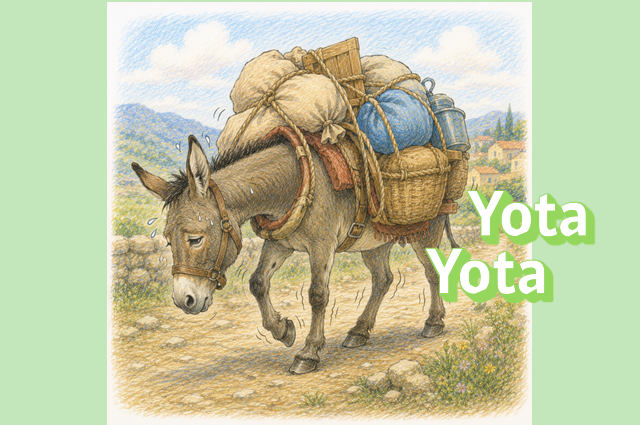
Have you ever seen someone walking so unsteadily that they looked as if they might fall?
Or watched a newborn animal taking its very first shaky steps?
That wobbly movement in Japanese is expressed as:
“Yota Yota” (よたよた)
Let’s hear how it sounds!
What is “Yota Yota” (よたよた)?
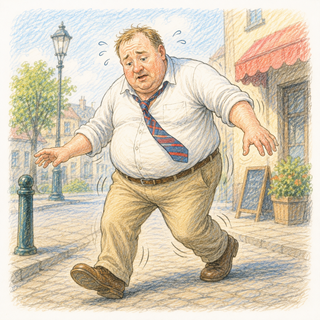
“Yota Yota” describes:
- Walking unsteadily
- Moving with poor balance
- Taking weak, wobbly steps
It describes someone moving as though they might stumble at any moment.
Pronunciation
yoh-tah yoh-tah
(Say it with a gentle rhythm, like slow, shaky footsteps.)
Category
Motion
What Does “Yota Yota” Look Like?
It looks like an elderly person carefully making each step.
A sleepy toddler learning to walk.
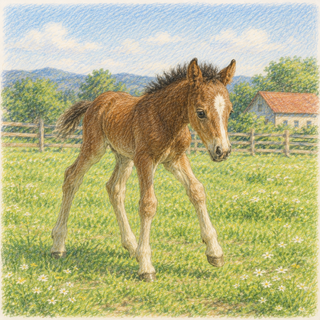
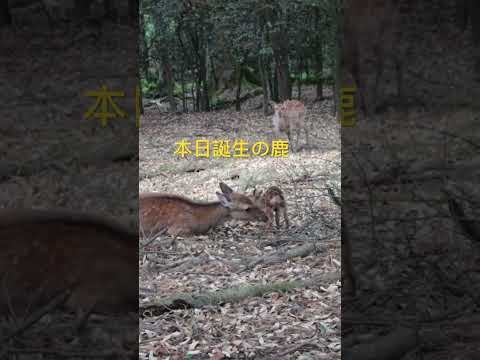
A newborn foal wobbling across a field.

How Do You Say It?
Say it with a slow, shaky voice:
Yota yota…
Like someone carefully trying not to lose their balance.
Example in Daily Life
Example: A newborn foal
The newborn foal walked across the field, taking its first steps —
yota yota…
Everyone smiled as it slowly found its balance.
Cultural Note
In English, you might say:
- “Wobble”
- “Totter”
- “Walk unsteadily”
But “yota yota” expresses more than simply walking unsteadily.
It captures the charming, slightly helpless movement of someone who is struggling to keep their balance.
Japanese speakers often use it for babies, elderly people, young animals, or anyone whose steps look weak but endearing.
It suggests:
Unsteady steps
Shaky movement
A lovable lack of balance
Watch & Feel the “Yota Yota” World!
Feel the “Yota Yota” — A Newborn Fawn’s First Steps
Try Using It!
When someone takes shaky little steps…
When a baby or young animal is learning to walk…
When every step looks a little unsteady…
Say it gently:
Yota yota…
Sometimes the smallest, shakiest steps are the most heartwarming.










Comments