
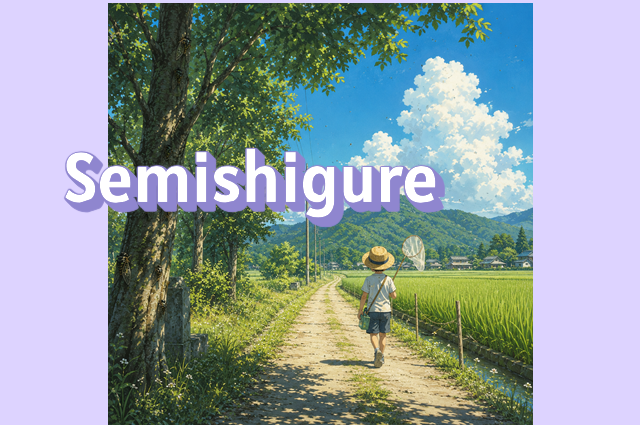
The chorus of cicadas filling the summer air.
That is one way to describe semishigure (せみしぐれ / 蝉時雨).
But that definition alone does not fully explain the word.
Cicadas sing in many parts of the world.
So why did Japanese people compare their voices to rain?
A Word That Means More Than Its Definition
The word semishigure is made up of:
- semi (せみ / 蝉) — cicada
- shigure (しぐれ / 時雨) — a passing shower
Literally, it means “cicada shower.”
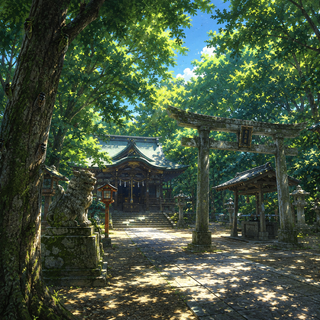
Of course, no rain is falling.
Instead, countless cicadas sing together so densely that their voices seem to pour down over the landscape like rain.
Yet when Japanese people hear the word semishigure, they rarely think only about insects.
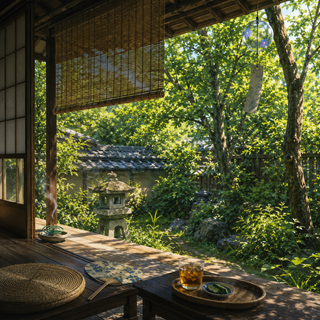
They often imagine an entire summer scene:
- brilliant blue skies
- blazing sunshine
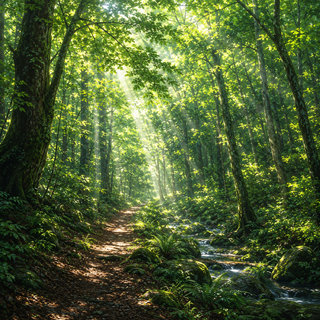
- green forests
- hot afternoon air
- a quiet countryside filled with endless cicada songs
In other words, semishigure is not simply about sound.
It is the soundscape of a Japanese summer.
The Onomatopoeic Feelings Hidden Inside
Semishigure is not an onomatopoeia.
Yet it can be understood through onomatopoeic feelings.
Gira Gira (ぎらぎら)
The blazing summer sun fills the sky with dazzling light.

Mīn Mīn (みーんみーん)
Cicadas begin their familiar summer chorus.
Jī Jī (じーじー)
Different cicadas join in, creating layer upon layer of sound.
Shiiin… (しーん)
Suddenly, the singing stops.
For a brief moment, the silence feels almost louder than the chorus itself.

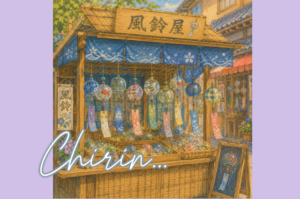
Chirin… (ちりん)
A wind chime gently rings in the quiet, making the stillness of summer feel even deeper.
Tsuku Tsuku Boshi (つくつくぼうし)
As late summer approaches, a different cicada begins to sing, quietly reminding us that the season will not last forever.
These sounds are not part of semishigure itself.
But together they create the atmosphere hidden inside the word.
Why Did Japanese People Compare Cicadas to Rain?

Cicadas sing in many countries.
Yet Japanese people did not compare them to music.
They compared them to rain.
Perhaps it is because the sound does not come from one insect.
It falls from every direction.
From every tree.
From every corner of the forest.
Just like a summer shower, it surrounds everything.
The interesting question is not:
“What is semishigure?”
The interesting question is:
“Why did Japanese people think the sound of cicadas was like rain?”
There is no single answer.
But the expression itself tells us something about how Japanese people listen to nature.
What Does Semishigure Tell Us About Japan?
Many Japanese words describe more than what we can see.
Some describe what we hear.
Words such as:
- komorebi (sunlight filtering through leaves)
- hanafubuki (a storm of cherry blossom petals)
- oborozukiyo (a hazy moonlit night)
- samidare (early summer rain)
- semishigure (a shower of cicada songs)
These words do more than describe nature.
They invite us to experience it with all of our senses.
In that sense, semishigure is more than the sound of insects.
It is a small window into how Japanese people hear summer itself.
Final Thought
Semishigure means the chorus of cicadas filling the summer air.
But that is only the beginning.
The real meaning may be found in the sounds hidden inside the season:
gira gira…
mīn mīn…
jī jī…
shiiin…
chirin…
tsuku tsuku bōshi…
Perhaps that is why Japanese people thought this sound was important enough to give it a name.











Comments