

Some manga translations may seem surprising at first glance.
Let’s take a closer look at the original Japanese and discover why this translation works.
At a Glance
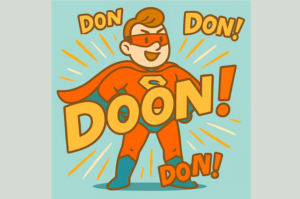
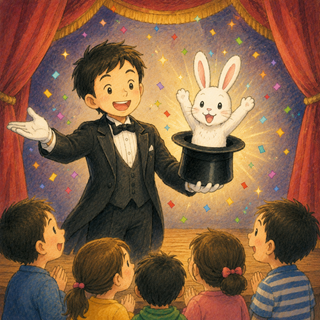
In one scene, the English edition uses “Ta-da!”, while the original Japanese simply says どん! (don!).
| English Translation | Original Japanese |
|---|---|
| Ta-da! | どん! (don!) |
At first, this may seem like an unusual translation.
After all, ta-da! is something people say when proudly revealing something, while don! looks like a loud sound effect.
So why did the translator choose it?

Why This Translation?
The key is that どん! (don!) is not always describing an actual sound.
In Japanese manga, it often serves as a visual cue that tells the reader:
- This is an important moment.
- Look at this!
- Here comes the big reveal.
- Feel the impact of this scene.
Instead of translating the sound literally, the English version recreates the same dramatic feeling for English readers.
In other words, the translation focuses on the reader’s experience, not the sound itself.

Understanding the Original Japanese
The Japanese expression どん! (don!) has several uses.
It can describe:
- a heavy impact,
- a loud explosion,
- or a dramatic entrance or appearance.
In manga, the third meaning is especially common.
That is why a phrase like “Ta-da!” can sometimes feel more natural than a literal sound effect in English.
Why This Works
Good manga translation is not always about finding the closest dictionary equivalent.
Sometimes the translator asks a different question:
“What should the reader feel at this moment?”
When the goal is to recreate surprise, excitement, or dramatic emphasis, “Ta-da!” can communicate the same effect that どん! creates for Japanese readers—even though the two expressions are not literal equivalents.
That is one of the fascinating challenges of manga translation.











Comments