
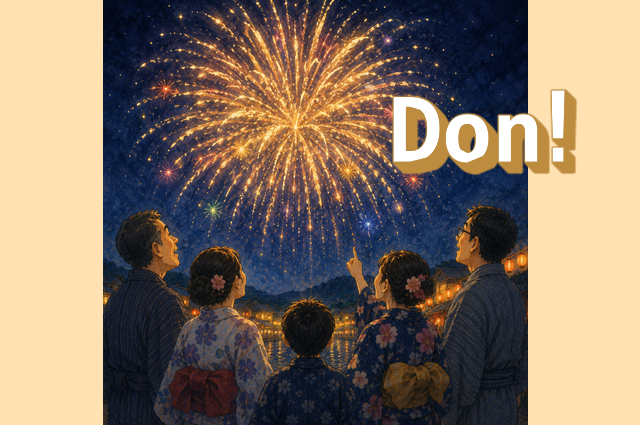
If you have ever compared a Japanese manga with its English translation, you may have noticed something surprising.
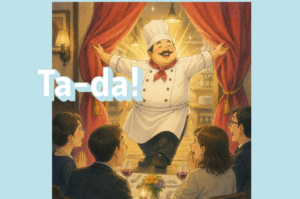
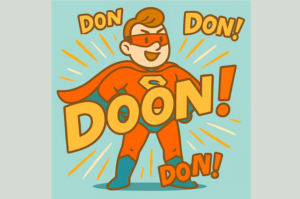
A bold 「どん!」 (don!) in Japanese sometimes becomes “Ta-da!” (or “Tada!”) in English.
At first glance, this seems like a strange translation. After all, ta-da is something people say when proudly revealing something, while don! looks like a loud sound effect.
So why does this happen?
“Don!” Is More Than Just a Sound
In everyday Japanese, don! (どん!) can certainly represent a heavy impact.
A box hits the floor — don!
Thunder echoes in the distance — don!
A firework explodes — don!
But manga uses don! in another fascinating way.

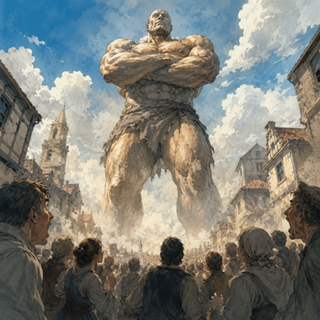
It often appears at the exact moment when the author wants the reader to stop, look, and feel the impact of a scene.
A hero makes a dramatic entrance.
A mysterious character is finally revealed.
An important object suddenly appears.
A shocking truth is announced.
In these moments, don! is not describing a real sound. Instead, it works as a visual signal that says:
“This moment is important.”
Why English Sometimes Uses “Ta-da!”
English does not normally use a sound effect like don! for dramatic reveals.
Instead, translators often choose an expression that creates a similar feeling for English readers.
One common choice is “Ta-da!”
Although ta-da is not a literal translation of don!, it captures the sense of presentation, surprise, or dramatic emphasis.
Rather than translating the sound itself, the translator is translating the effect on the reader.
A Different Way of Thinking
This is one of the most interesting differences between Japanese and English manga.
Japanese often uses an onomatopoeia to strengthen the visual impact of a scene.
English, on the other hand, may replace it with an expression that communicates the same dramatic feeling.
Neither approach is more correct.
They simply guide the reader in different ways.

Looking Beyond the Words
This small example reminds us that translating manga is not only about changing one language into another.
It is also about recreating the experience.
Sometimes that means translating a sound.
Sometimes it means translating an emotion.
And sometimes, as with don!, it means translating the dramatic moment itself.
That is one of the reasons comparing Japanese and English manga can be so fascinating.





Comments