
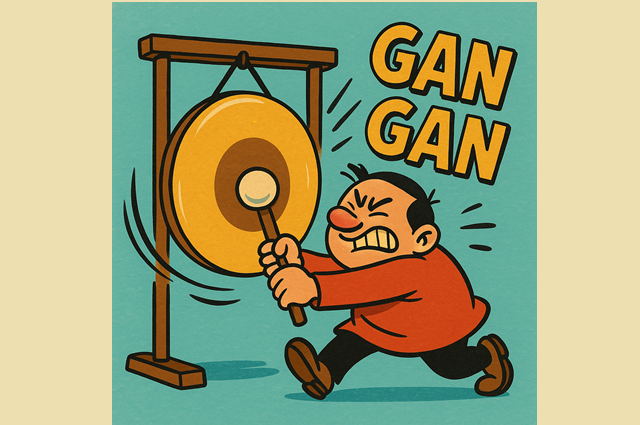
Ever felt your head pounding from a headache?
Or heard loud construction banging outside?
That’s when the Japanese onomatopoeia “Gan Gan” (がんがん) strikes —
a powerful word that expresses repetition, intensity, and overwhelming force.
Let’s hear it bang!
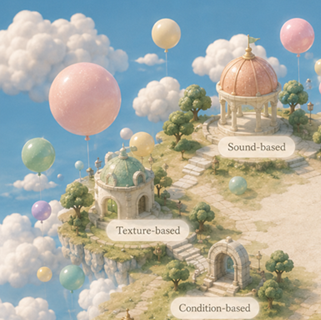
What is “Gan Gan” (がんがん)?
“Gan Gan” is a repetitive Japanese onomatopoeia used in different contexts —
but always to express strong, continuous intensity.
It’s commonly used for:
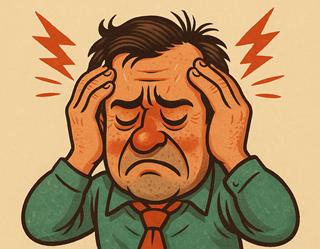
- Severe headaches (“My head is pounding — gan gan“)
- Loud noises like music or hammering
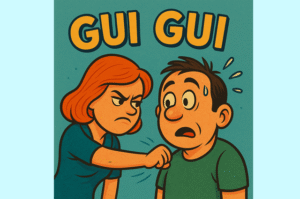
- Intense effort or force, often like “gui gui”
Nuance:
- Intense, repeated, sometimes aggressive
- Can be physical (sound or pain) or emotional (momentum, pressure)
- Slightly overwhelming
Pronunciation
gan-gan
(Emphasize the first syllable, repeat with urgency — like metal striking.)
Categories
Sound / Condition
What Does “Gan Gan” Look Like?
Sound lines drawn aggressively around the source
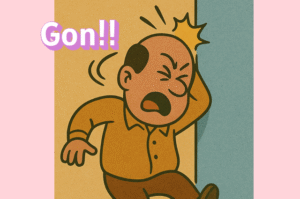
A manga character clutching their head in pain
Concert speakers vibrating loudly
A person pushing through tasks with intensity

How Do You Say It?
Say it with force, like you’re inside a drum:
Gan gan!
Example in Daily Life
Example: A throbbing headache
After staying up all night,
his head started pounding —
gan gan…
Cultural Note
In English, you might say:
- “My head is throbbing”
- “It’s pounding”
- “Loud banging”
But “gan gan” includes not just volume, but frequency and intensity — like a drumbeat that won’t stop.
It can be physical or metaphorical — describing noise, pain, effort, or even confidence.
Watch & Feel the “Gan Gan” World!
Feel the “Gan Gan” — Drinking a lot!
Why….

Try Using It!
Next time you:
- Feel overwhelmed by sound or pressure
- Describe a powerful headache
- See someone powering forward like a machine…
Say it sharply:
Gan gan!








Comments