
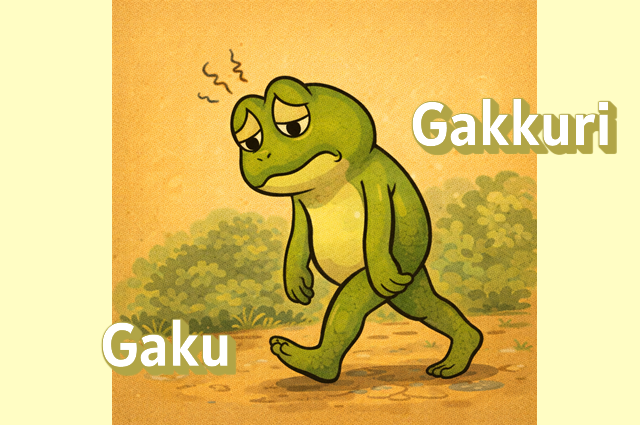
Ever had your shoulders drop in disappointment?
Or felt a deeper emotional letdown — like losing all motivation?
In Japanese, both of these are captured through sound and form:
Gaku (がくっ)
あわせて読みたい

What Is “Gaku”? The Japanese Sound of Sudden Disappointment or Collapse
Ever felt all your energy leave you in an instant — like your emotions or strength just dropped off a cliff?That sinking moment when your shoulders slump, or…
Gakkuri (がっくり)
あわせて読みたい
What Is “Gakkuri”? The Japanese Word for Deep Disappointment — Almost Onomatopoeia
Ever received bad news and felt your shoulders slump? Or missed a big chance and dropped your head in regret? That’s when the Japanese word “Gakkuri” fits pe…
Table of Contents
Differences Between “Gaku” (がくっ) and “Gakkuri” (がっくり)
スクロールできます
| Gaku | Gakkuri | |
|---|---|---|
| Type | Onomatopoeia | Almost onomatopoeia |
| Meaning | A sudden bodily collapse or drop | A deeper emotional or physical dejection |
| Nuance | Momentary — knees buckling, neck drooping | Ongoing — slumped shoulders, lingering letdown |
| Sound | Yes (a visual+audio drop) | Not a literal sound, more a state |
| Usage | “His knees gave out — gaku!” | “She sat down in disappointment — gakkuri.” |
| Verb Compatibility | Often stands alone | “gakkuri suru” as a verb form |
| Tone | Physical / visible | Emotional / reflective |
Examples in Daily Life
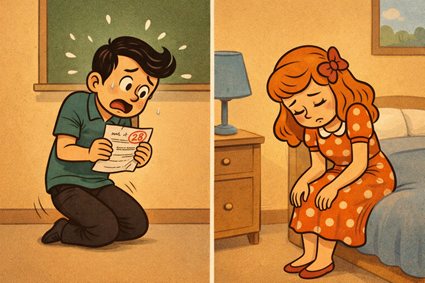
Example 1: Sudden physical drop (Gaku)
His knees gave out when he saw the test score —
gaku!
Example 2: Emotional slump (Gakkuri)
After hearing the rejection,
she sat down — gakkuri…
Try Using Them!
When you physically collapse a bit from shock? → Say gaku!
When you feel truly down and dejected? → Say gakkuri…
Explore More: Comparison Series








Comments